
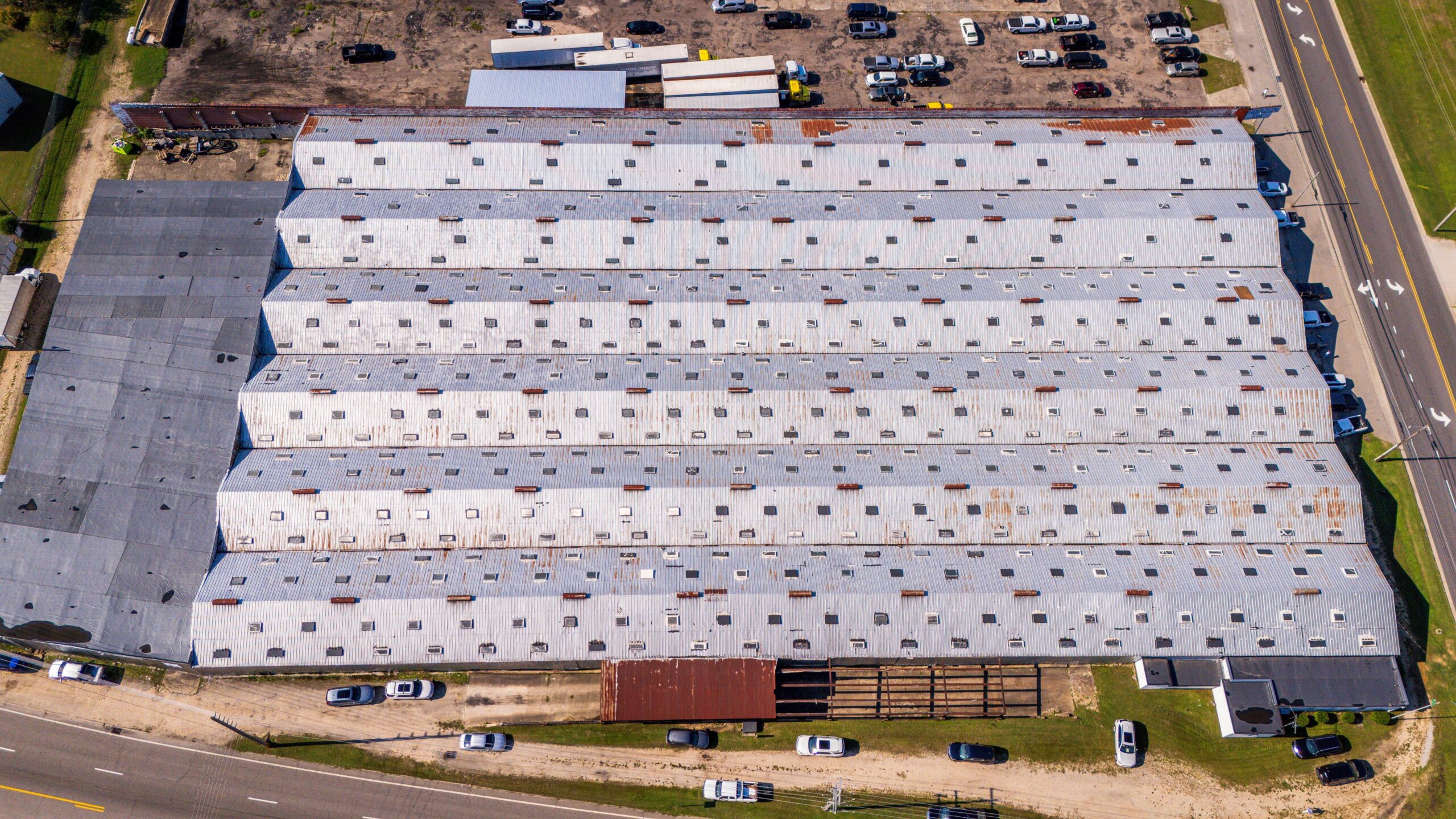
A failed box gutter on a warehouse or factory rarely looks dramatic from the ground. Water finds a path at an outlet, a joint or a poor fall, and the first sign is often a stain on the wall or stock below.
This guide looks at why box gutters fail on industrial units across North Wales, Cheshire and the Wirral, the warning signs to watch for, and how planned maintenance or a proper box gutter repair can stop the leak before it spreads.
Key Takeaways
Most industrial box gutter leaks start at a detail, and several causes often appear together:
- Blocked outlets, failed joints and laps, corrosion, ponding and poor falls
- Undersized channels and thermal movement along long industrial runs
- A lack of planned maintenance, because the gutter is hidden from everyday view
- A local repair, a liquid lining or a replacement can all be the right route, depending on the condition of the channel
- If the unit is already leaking, we can help make the building weathertight first
The leak can show up some way from the actual defect, so the gutter needs to be inspected, not just the stain.
What Box Gutters Do On An Industrial Roof
On many commercial and industrial buildings the rainwater does not run into a visible eaves gutter. It is collected in a box gutter — a rectangular channel at the roof edge, behind a parapet, or in the valley between two roof slopes — then dropped through outlets into the downpipes.
Because those channels sit out of everyday view, defects can develop for some time before anyone notices.
That is why box gutter and gulley maintenance is a regular part of the commercial and industrial roofing work we carry out as a Flintshire-based roofing firm with more than 15 years experience.
Why Box Gutters Fail
Most box gutter leaks start at a detail, and several of the causes below often appear together.
01
Blocked Outlets
Silt, grit, leaves and bird nesting material collect at the lowest point — almost always the outlet. Water then backs up, overtops the upstand or tracks under the lining.
02
Failed Joints And Laps
Box gutters are built in sections, with joints, laps, stop ends and junctions. Sealants dry and shrink, laps split, and water can travel along the joint.
03
Corrosion
Many industrial box gutters are metal, or have a metal substrate under an older lining. Standing water, damaged coatings and trapped silt accelerate rust.
04
Ponding And Poor Falls
If the gutter was laid too flat, has settled, or has been distorted, water sits in the channel after rain and keeps joints and coatings wet.
05
Undersized Gutters
A later extension, new plant or a change of covering can push more water into a channel that was only just adequate, so it overflows in ordinary heavy rain.
06
Thermal Movement
Industrial box gutters can run for many metres. If expansion and contraction are not allowed for, joints open and coatings crack.
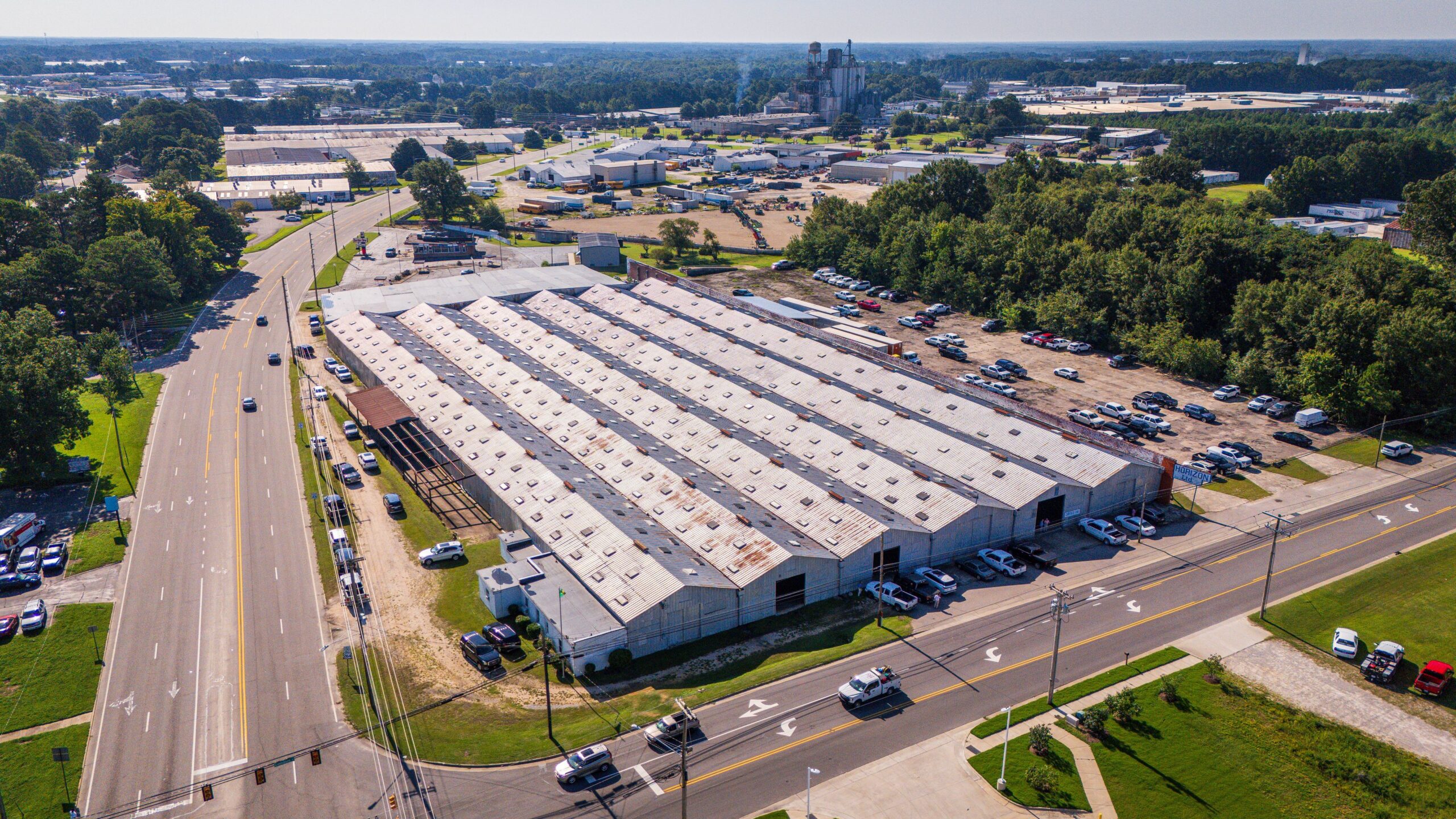
The wet climate across North Wales and the North West, which Met Office rainfall records show as one of the wetter parts of the UK, makes this more likely on exposed roofs. Once rust has gone far enough, a cosmetic patch will not last, and a new lining alone will not fix a gutter that cannot take the volume of water discharged into it.
Roofer’s tip: Box gutters are easy to ignore because they are hidden. A channel that is never cleared will silt up and fail at the joints, and a small defect can be left until it soaks the building. A lack of planned maintenance is often why that happens.
Warning Signs To Watch For
These are the signs that a box gutter is starting to fail. None of them should be left until the next storm.
01
Internal Staining
Damp staining on internal walls, usually along the line of the gutter, at a corner, or around an outlet.
02
Marks On The Outside
Water marks on cladding, soffits or at the head of a downpipe.
03
Overflow In Ordinary Rain
Overflow or dripping during ordinary rainfall, not only in a storm.
04
What You Can See In The Channel
Visible rust, splits, blistered coatings or standing water in the gutter.
05
Debris At Outlets
Vegetation, silt or debris around outlets, which is often the start of a blockage.
06
Frost Or A Musty Smell
Leaks that appear after a hard frost, or a musty smell in a stock or production area below the roof edge.
If the unit is already leaking, Onyx Roofing provides emergency call-outs so the building can be made weathertight while a longer-term box gutter repair is planned.
How Planned Maintenance Stops Most Failures
A regular inspection is the most effective way to keep industrial box gutters working. Gutters on a large industrial roof should not be left from one crisis to the next. Access for that work has to be planned safely, in line with HSE guidance on working at height.
- Inspect the hidden channel. Look at the gutter itself, not just the stain inside the building, including sections behind a parapet or in a valley.
- Clear outlets and gulleys. Remove silt, leaves, grit and nesting material before water can back up.
- Check joints, laps and stop ends. These are the details where sealants shrink and laps split.
- Look for ponding and corrosion. Standing water and rust around outlets, laps and fixings are early warnings.
- Deal with small defects early. A local repair is much easier before the leak soaks stock or a working area.
- Review capacity and falls. Planned visits also show whether the gutter is undersized or has lost its fall, and whether a lining or a replacement is the better longer-term route.
As well as box gutter and gulley maintenance, Onyx Roofing carries out flat roof repairs and replacements — EPDM, liquid systems and single-ply roofing — as well as coatings, roofline, over-clad roofs, and cladding and sidings across North Wales, Cheshire and the Wirral.
Is a box gutter leaking on your unit?
We Can Inspect It And Explain The Options
We cover commercial and industrial buildings across North Wales, Cheshire and the Wirral. Call or message us for advice or a quote.
Repair Options: Patch, Reline Or Replace
Not every leaking box gutter has to come out. The right box gutter repair depends on the condition of the channel, the outlets and the structure around it.
| Route | When it fits | What’s involved |
|---|---|---|
| Local repair | The defect is isolated — a failed joint, a split at an outlet, or a small area of damaged lining — and the rest of the gutter is sound | The defect is repaired and the rest of the channel stays as it is |
| Relining or coating | The gutter body is still structurally sound and can be cleaned and prepared | A new, continuous waterproof layer is applied over the existing channel, without a full replacement |
| Replacement | The metal is badly corroded, the gutter is undersized, or the falls and outlets cannot be made to work | The gutter is replaced, or the drainage arrangement is redesigned |
Lining A Box Gutter With A Liquid System
On a sound, properly prepared gutter, a liquid-applied membrane can line the channel as a seamless coating, with no joints along its length. That is useful on industrial units, where outlets, corners and laps are often the weak points.
Lava20, made by Owl Waterproofing Solutions, is one such system. Owl states that Lava20 is suitable for gutters, valleys, internal corners, edge trims and other drainage features, and that it forms a seamless, durable membrane.
Where the gutter is metal and rusted, Owl’s guidance is to treat the rust first — typically by wire-brushing and applying a rust inhibitor — and allow it to dry completely. Joints, laps, valleys and outlets are then reinforced with polyester tape or chopped strand matting. For complex details, including gutters and outlets, Owl specifies the fibre-reinforced Lava Detail 20 grade; Lava20 Vertical can be used on tight angles so the coating does not sag.
The gutter still has to be clean, dry and sound. You can read more in our guide to commercial flat roof repair with Lava20. The only reliable way to choose between a local repair, a lining and a replacement is to inspect the gutter.
Worth knowing: If rust has gone far enough, or the gutter is undersized, a new lining alone will not last. Ask for the inspection to cover the condition of the metal, the outlets and whether the channel can actually take the water that reaches it.
Frequently Asked Questions
Why Do Box Gutters Leak On Industrial Units?
The most common reasons are blocked outlets, failed joints and laps, corrosion, ponding caused by poor falls, undersized channels, thermal movement and a lack of maintenance. On a large industrial roof those faults often appear together, and the leak can show up some way from the actual defect.
Can A Leaking Box Gutter Be Lined Rather Than Replaced?
Sometimes, yes. If the gutter body is structurally sound and can be cleaned and prepared, a liquid-applied lining can form a seamless membrane over the existing channel. If the metal is badly corroded, or the gutter is undersized, replacement is the better option.
How Often Should Industrial Box Gutters Be Inspected?
There is no single interval that suits every building, but industrial box gutters should be inspected and cleared regularly, not only after a leak. Units with trees nearby, a large roof area or a history of ponding benefit from more frequent visits.
Is Lava20 Suitable For Lining An Industrial Box Gutter?
It can be, on a sound, properly prepared gutter. Owl states that Lava20 is suitable for gutters, valleys, internal corners, edge trims and other drainage features. Rust on metal has to be treated first, and joints, laps and outlets should be reinforced as set out in Owl’s guidance. An inspection will confirm whether a lining or a replacement is right for a particular building in the areas we cover.
What Should I Do If My Industrial Unit Is Leaking Now?
If water is already getting in, the first step is to make the building weathertight and find the source, which is not always directly above the stain. Onyx Roofing provides emergency call-outs across North Wales, Cheshire and the Wirral, and can then advise on a longer-term box gutter repair once the immediate leak is under control.
Onyx Roofing
Talk To Us About Box Gutter Repair On An Industrial Unit
If you have a leaking or ageing box gutter on a commercial or industrial building in North Wales, Cheshire or the Wirral, we can inspect it, advise whether a local repair, a liquid lining or a replacement is the right route, and quote the work. See our commercial and industrial roofing page, call 07405 569991, or email info@onyxroofing.co.uk. Call or message us for advice or a quote.
Do you have any current leaks, planned roofing work, or maintenance you’d like quoting? If so, get in touch and we’ll be happy to help.
Read more roofing advice on our blog or return to the Onyx Roofing homepage.