Leaking, crumbling or storm-damaged chimney? We repoint, re-lead, re-flaunch, rebuild and cap chimney stacks for homes across Flintshire, North Wales, Chester, Cheshire and the Wirral, with honest advice on what your chimney actually needs.
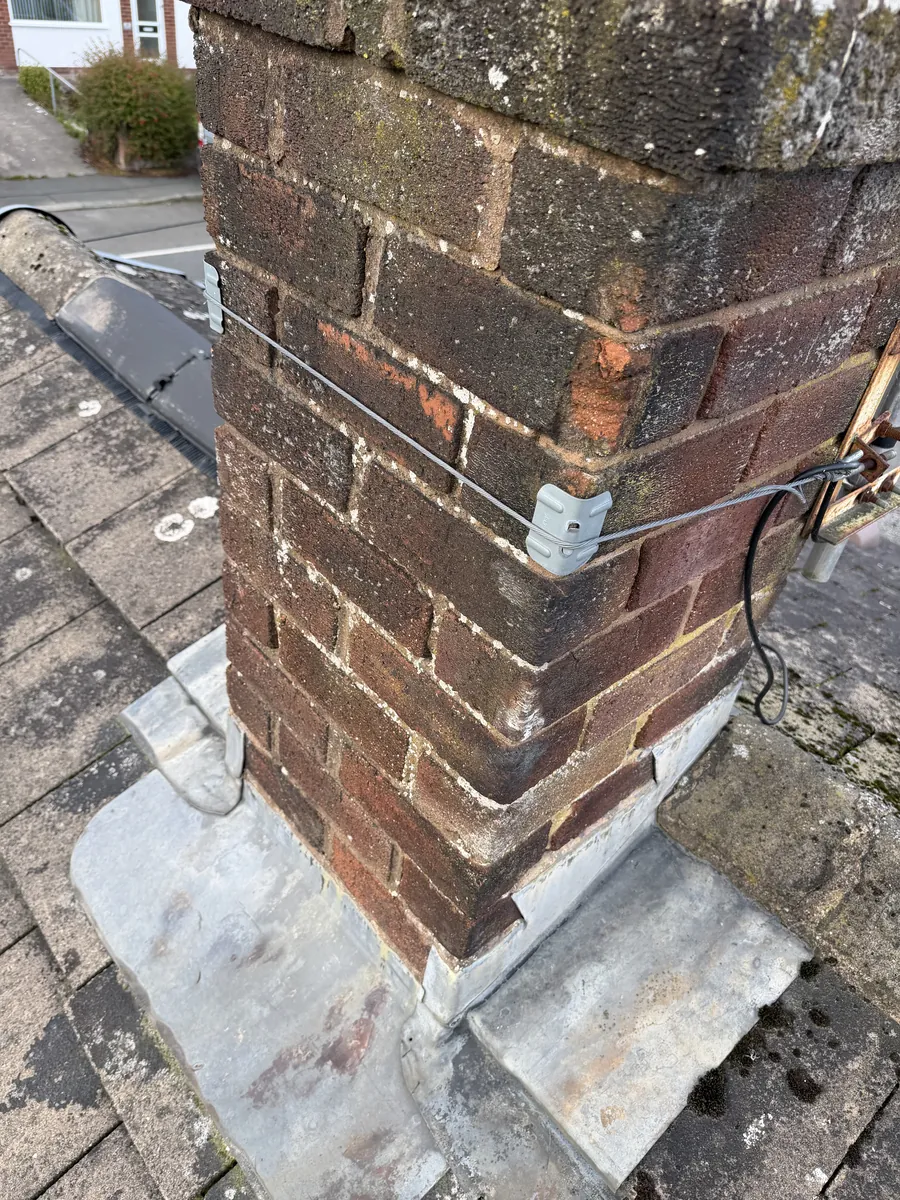
Your chimney is the most exposed part of your house. It stands above the roof line and takes the full force of wind, driving rain and frost, often for 80 years or more.
Most chimney problems start small: a cracked joint, a lifted strip of lead, a hairline crack in the flaunching. Left alone, water gets in, the damage spreads, and a simple repair becomes a rebuild.
We repair every part of the stack, from the pots down to the flashing where it meets the roof, and we tell you plainly which parts need work and which don’t. Chimney work is also a big part of our wider roof repairs service.
Water can get in at any of these points, so we check them all.
From a few cracked joints to a stack that needs taking down and rebuilding, we cover the full range of chimney work.
We rake out worn or crumbling mortar joints and repoint with a well-matched mix, so the brickwork stays dry and solid.
New stepped flashing, apron and back gutter in proper lead, dressed tight to the roof and fixed into the brickwork joints.
Cracked or crumbling flaunching is broken out and re-formed, sloped to shed water off the top of the stack.
Cracked or blown render hacked off and the stack re-rendered, giving porous or patched brickwork a clean, weatherproof finish.
We trace where the water is really getting in, then fix the cause, whether that’s the lead, the pointing, the flaunching or an open flue. Not sure it’s the chimney? See our roof leak repairs page.
When the brickwork is too far gone to repair, we take the stack down to sound brickwork and rebuild it, then re-flaunch and re-lead.
Loose pots reset or replaced, cowls and bird guards fitted, and disused chimneys capped with ventilation to keep rain and damp out.
An unused stack with problems is usually best removed, as it costs less than maintaining it. We take it down and tile over, or lower and cap it.
Loose pots, displaced bricks or lead lifted by high winds made safe and repaired. Urgent? See our emergency roof repairs.
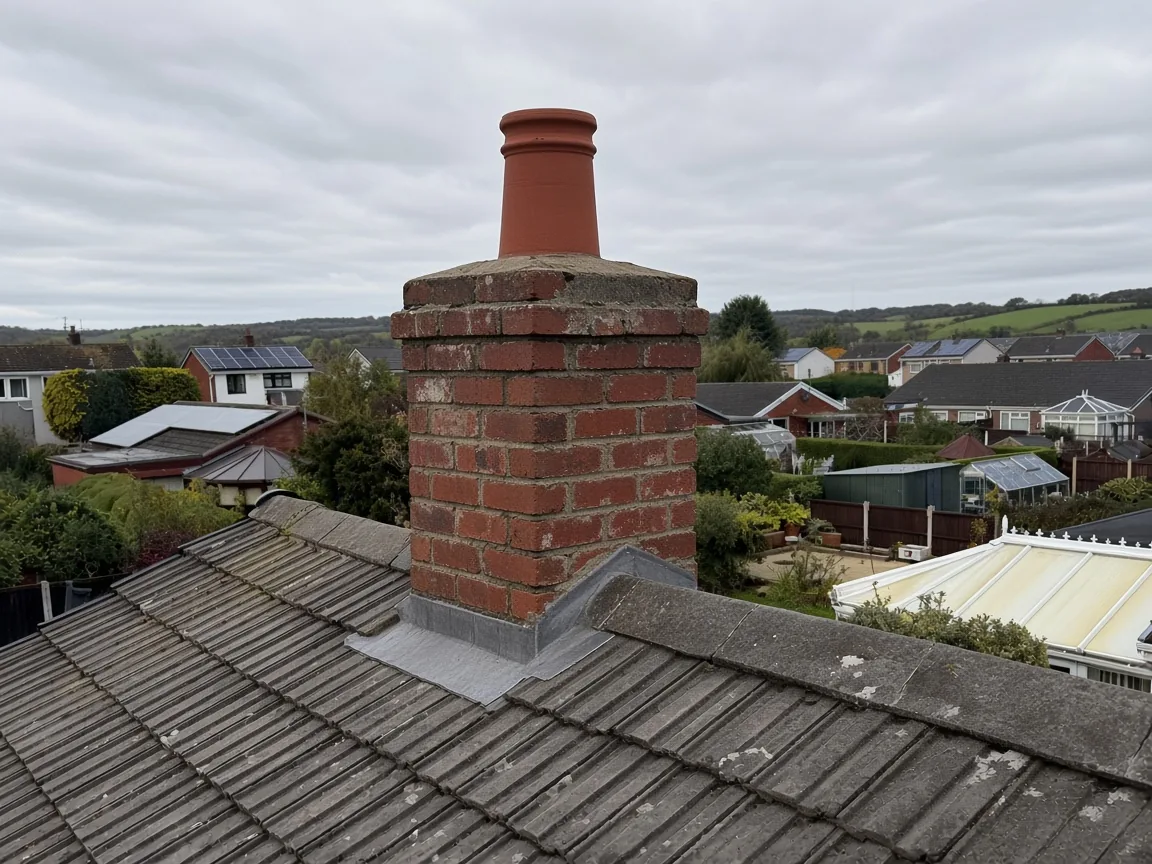
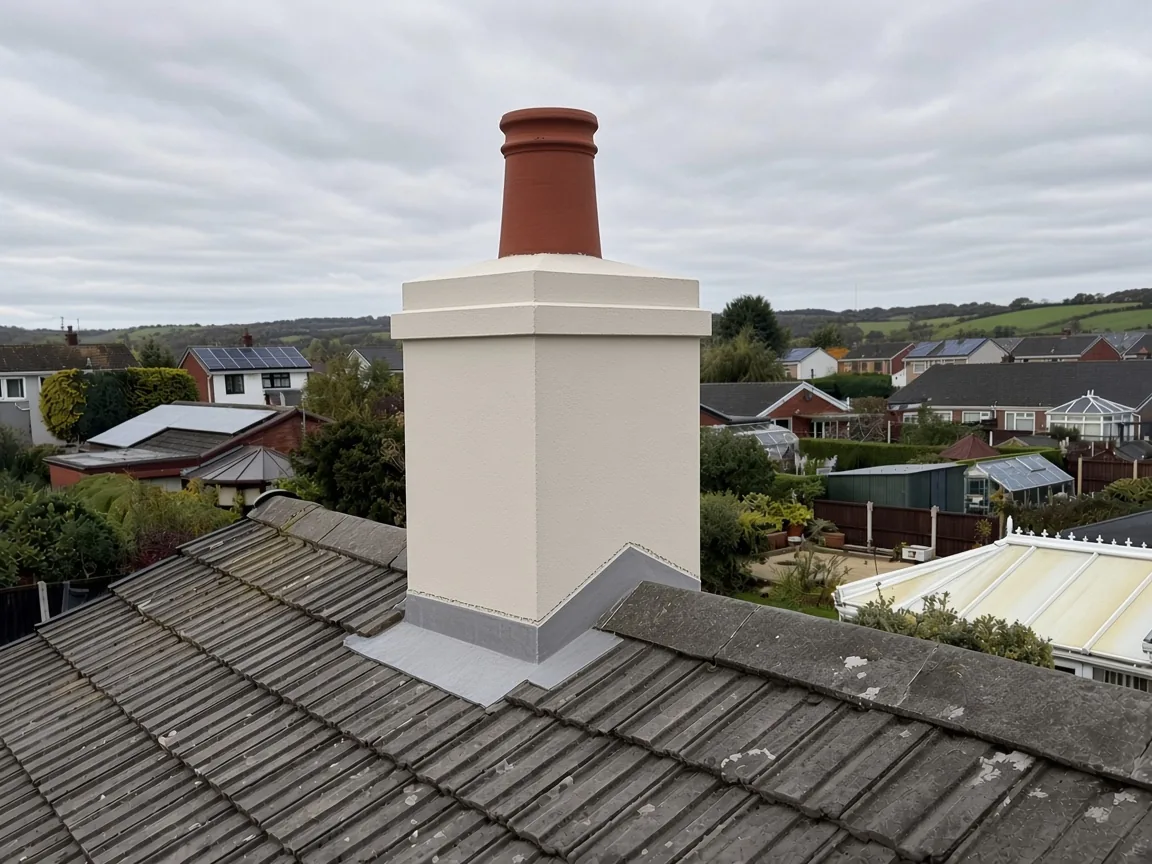
Removing a chimney breast inside your home is structural work and usually needs Building Control approval. Our chimney work is on the stack above the roof. If a stack is shared with a neighbour, a party wall agreement may be needed too.
Spot one of these? Here’s what it usually means and how it’s normally fixed. You can check most of them safely from the ground or inside the house.
| What You Notice | Likely Cause | Usual Repair |
|---|---|---|
| Damp patch on a ceiling or wall near the chimney | Lifted, split or failed lead flashing | Re-dress or replace the flashing |
| Damp on the chimney breast inside | Worn pointing letting rain soak into the bricks | Repoint the stack |
| Water or debris in the fireplace after rain | Open pot or cracked flaunching | Cowl, cap or re-flaunch |
| Bits of mortar or brick on the roof or in gutters | Crumbling joints or spalling bricks | Repoint or rebuild the top courses |
| Chimney pot leaning or loose | Cracked or broken flaunching | Reset the pot and re-flaunch |
| Stack visibly leaning or cracked | Long-term weathering or movement | Partial or full stack rebuild |
| Moss, plants or staining on the stack | Water sitting in the brickwork | Clean, repoint and check the lead |
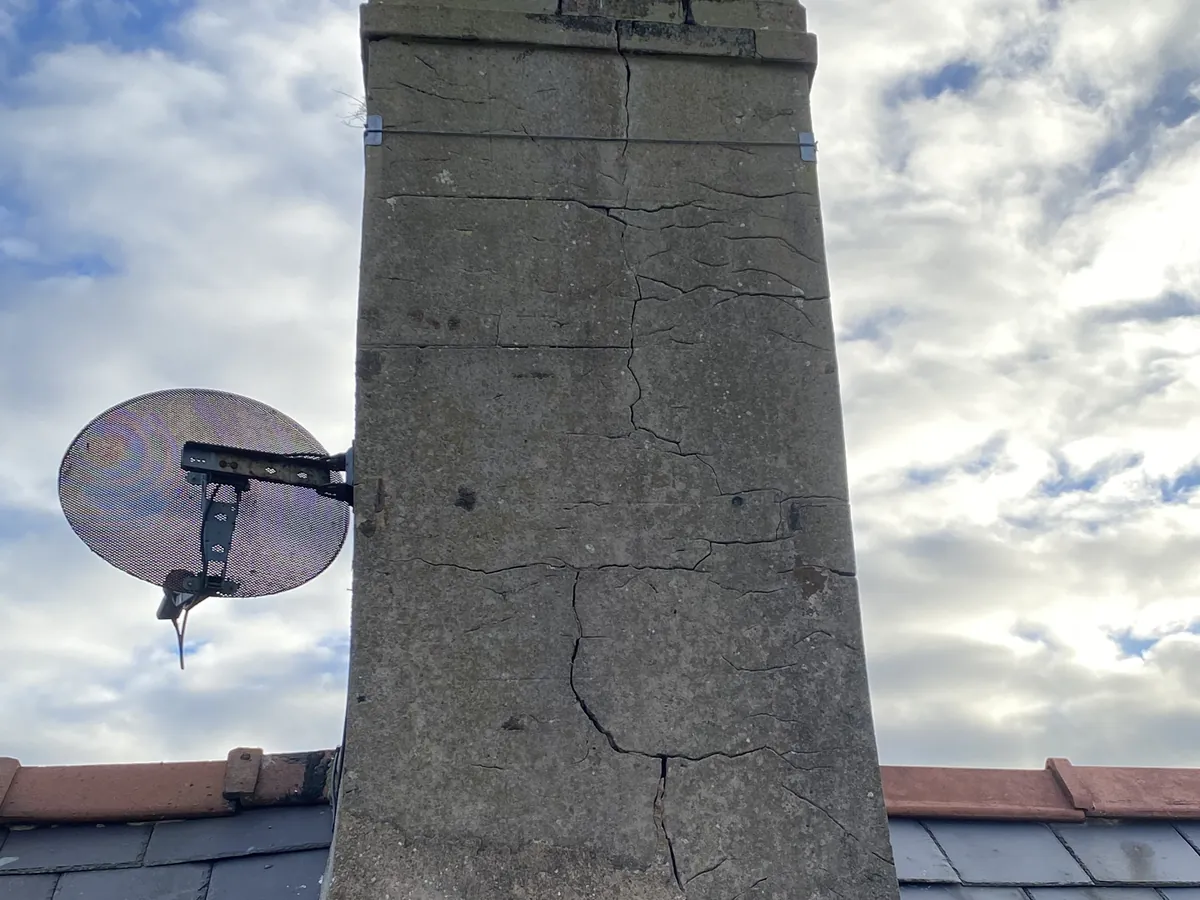
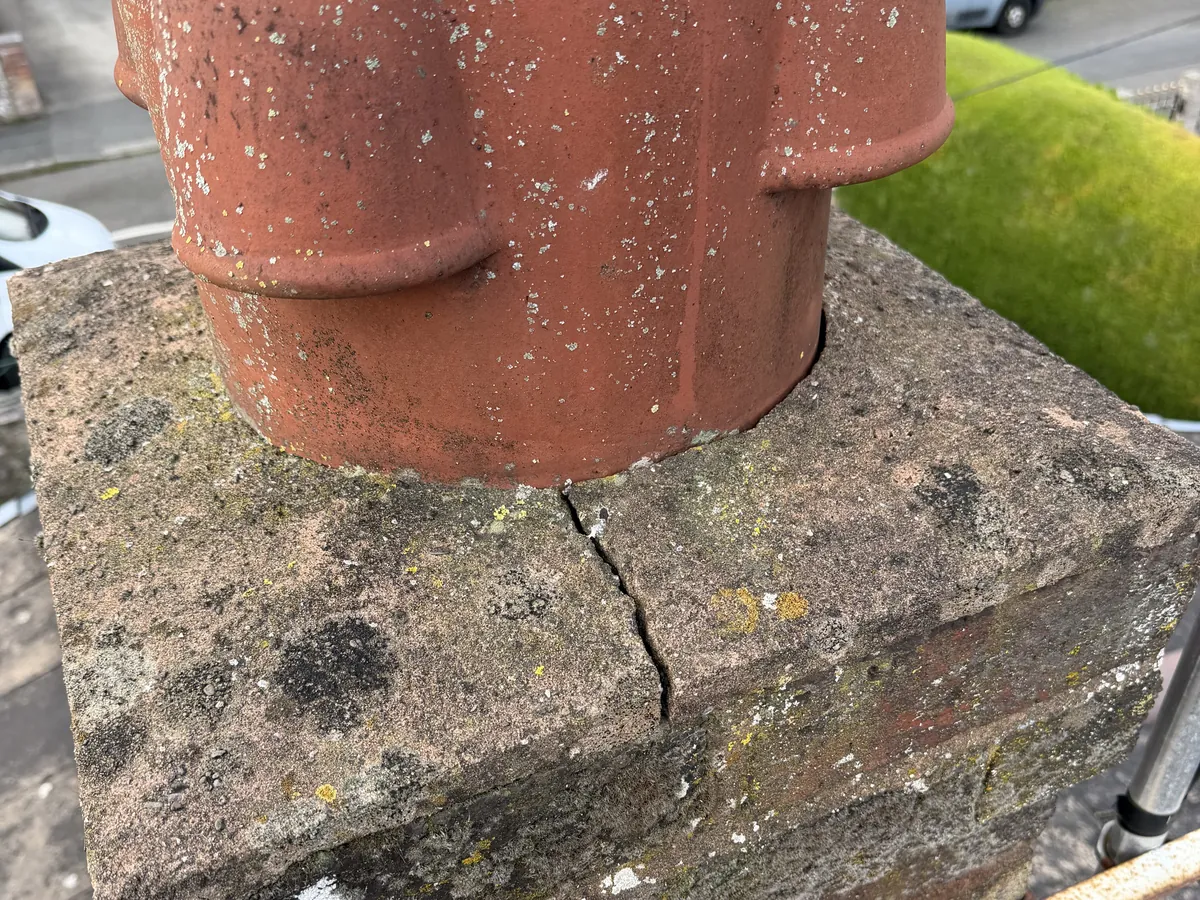
Never go up on the roof to look. Take photos from the ground or a window and send them to us.
Send us a few photos on WhatsApp and we’ll give you an honest view of what it needs.
A damp patch near the chimney is one of the most common calls we get, especially through autumn and winter. The tricky part is that the stain inside isn’t always next to the part that has failed.
Water can track down brickwork or along timbers before it shows. That’s why we check the whole stack rather than patching the first thing we see.
For typical repair figures, see our chimney repair cost guide.
Sealant or flashing tape smeared around a chimney might stop a drip for a few months, but it cracks and peels. Properly dressed lead is the long-term fix.
If water is coming through a ceiling, call 07405 569991. We offer emergency call-outs to make the chimney watertight, then come back to repair it properly.
Not every chimney needs the same fix. Once we’ve looked at your stack, we’ll explain which of these makes most sense for you.
For chimneys that are basically sound.
When the top of the stack is too far gone.
Keeps rain out of a chimney you no longer use.
Usually the best option for an unused chimney with problems, as it’s cheaper than paying to maintain it for years.
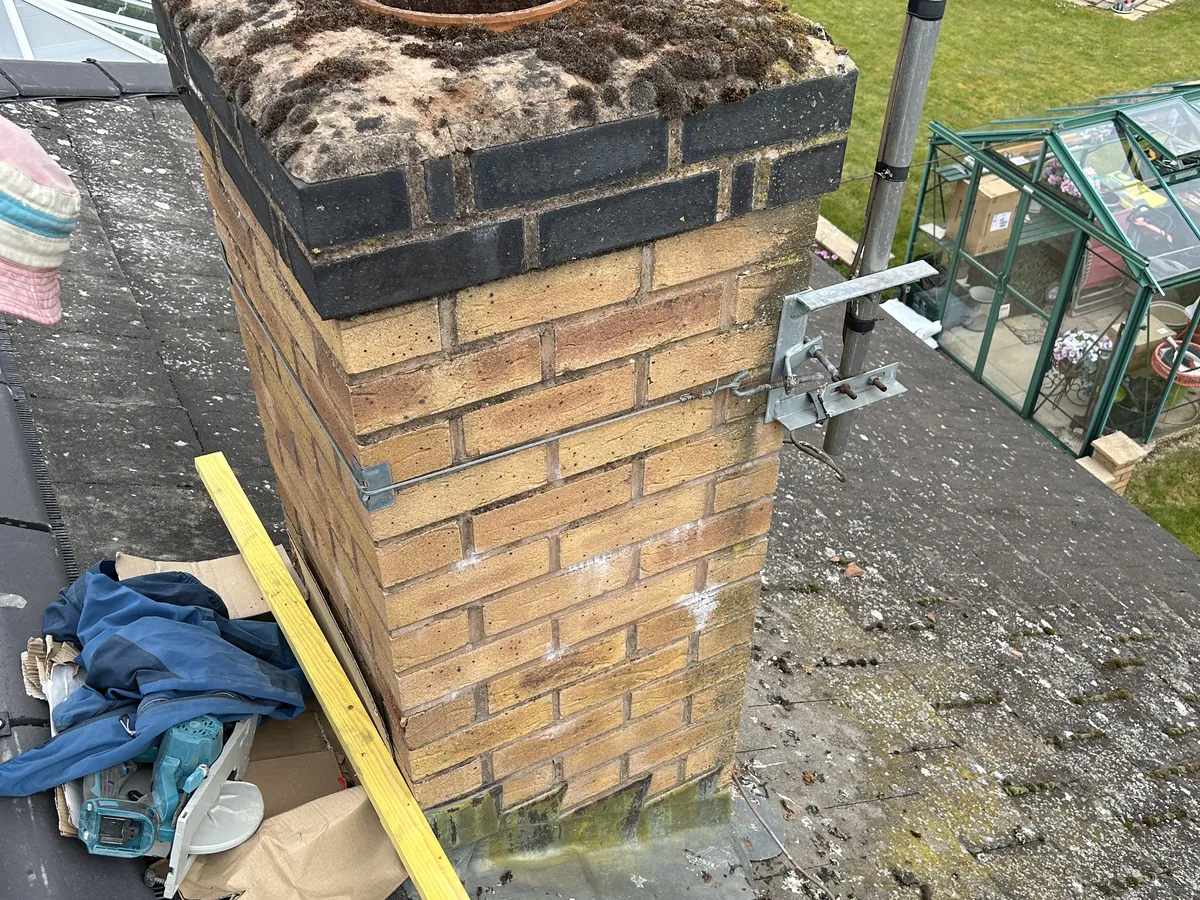
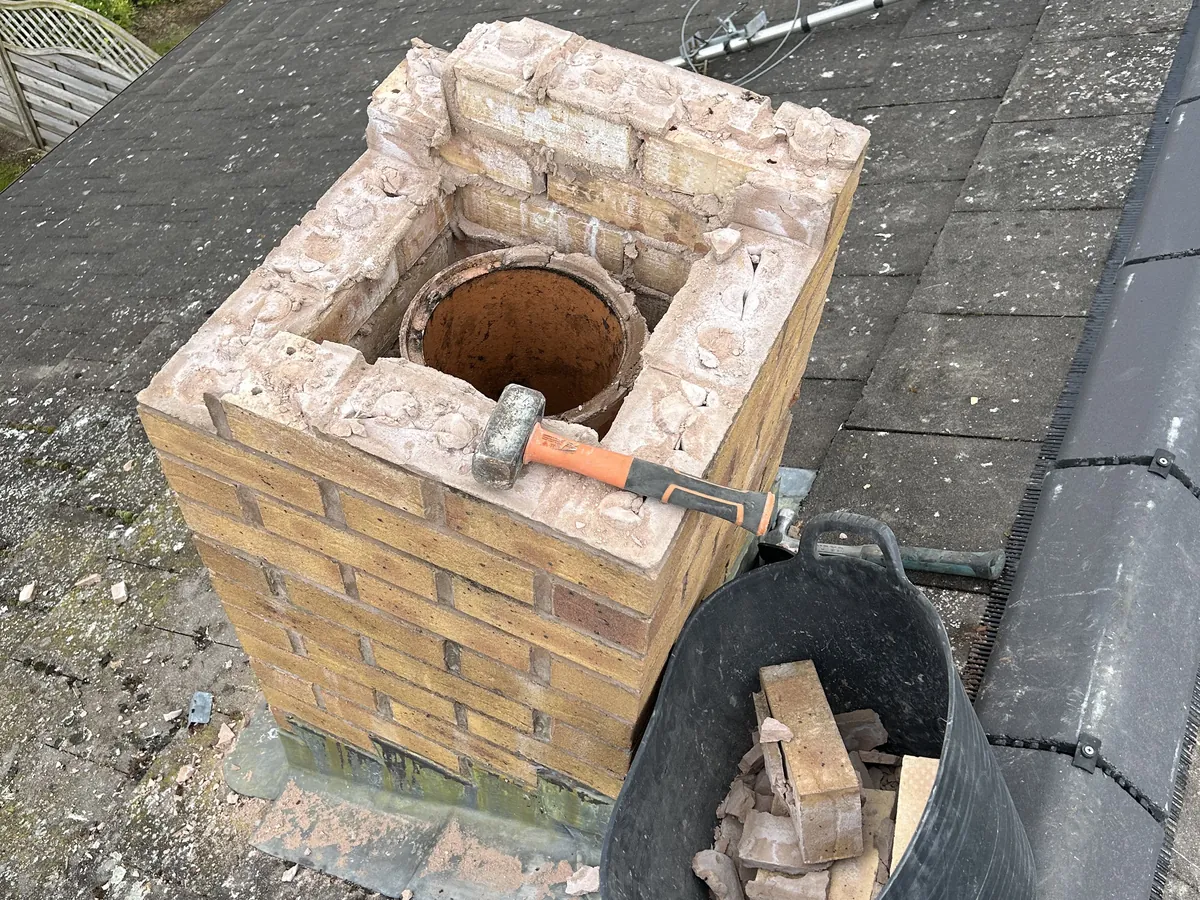

If a chimney you don’t use needs repointing, new lead or new flaunching, taking it down and tiling over the roof is typically the best course of action. You pay once, rather than paying for repairs every few years on a stack that does nothing for your home.
Live in a conservation area or a listed building? Reducing or removing a stack may need permission first, so check with your local council before work is booked.
Simple, honest and tidy, from the first photo to the finished stack.
Send a few photos on WhatsApp or give us a call. For most chimneys, we’ll then come out and take a proper look.
We explain what we found, what needs doing and what doesn’t, and give you a fixed, no-obligation quote.
We arrange the right access for your chimney. Ladders and roof ladders often work, and where access is harder, we’ll advise if scaffolding is needed.
Repointing, leadwork, flaunching or rebuilding, done with the right materials and matched to your existing brickwork.
We check the whole stack, the flashing and the roof around it, and send you photos of the finished work.
Debris cleared from the roof, gutters and garden, with our 10-year workmanship guarantee on the repair.
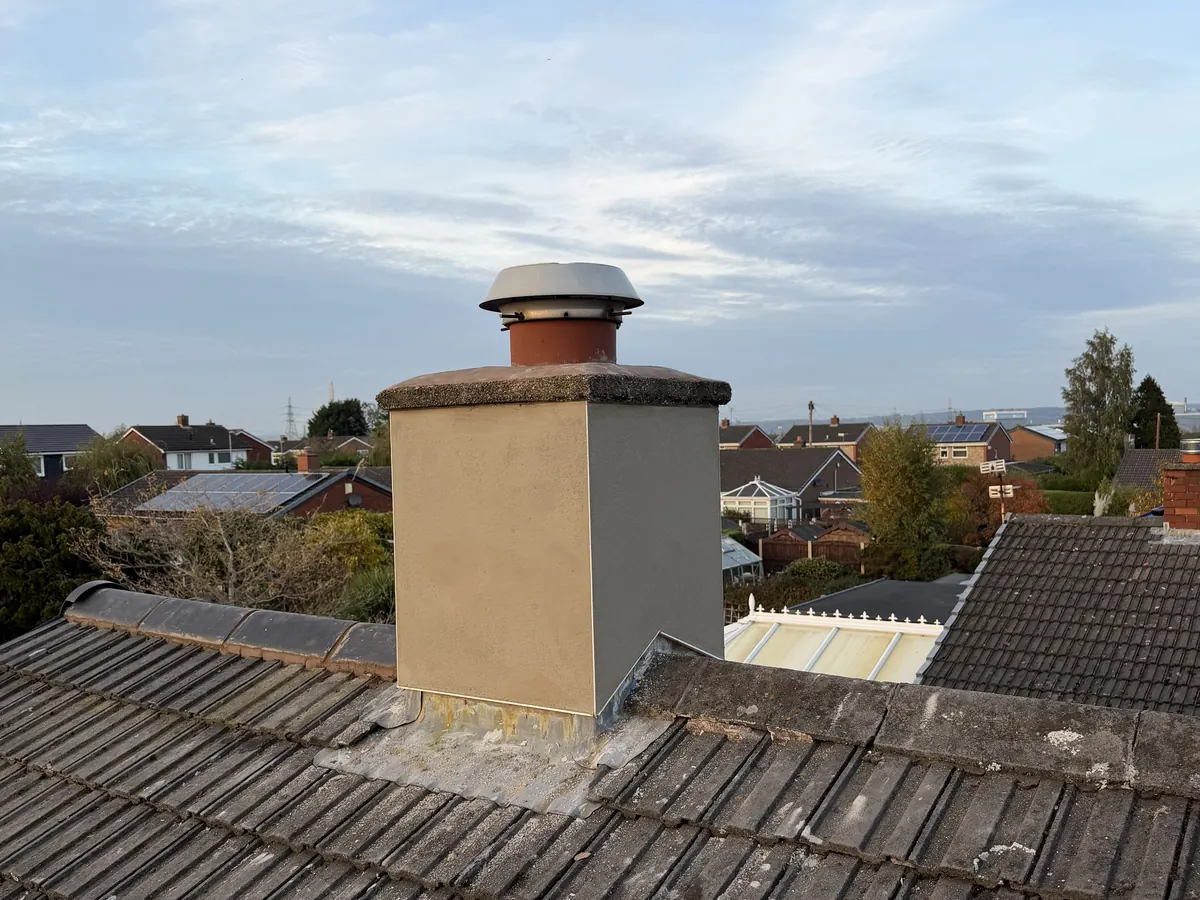
If access equipment goes up for your chimney, it’s worth us checking the ridge, valleys and nearby tiles at the same time, so you only pay for access once.
Most chimneys can’t be seen properly from the ground, so we show you photos of the problem and of the finished work.
We’re based in Holywell and know the chimneys round here well, from coastal terraces to hillside farmhouses.
Salt air and driving wind wear pointing and lead faster in Rhyl, Prestatyn and along the coast.
Our home county, covering Holywell, Mold, Flint, Buckley and Connah’s Quay.
Period brick stacks and shared chimneys on terraces in Chester and Ellesmere Port.
Repointing, leadwork and storm repairs for homes in Wrexham and across the Wirral.
Every chimney is different, so we price each job after looking at it. You’ll get a clear, fixed quote before any work starts. For typical figures, read our chimney repair cost guide.
Where the chimney sits, the roof pitch, height and ground access decide whether ladders, roof ladders or scaffolding are needed.
A large central or shared stack has more brickwork, lead and flaunching than a small side chimney.
One cracked flaunching is a small job. Pointing, lead and flaunching all failing together is a bigger one.
Rebuilding or removing part of a stack takes more time and materials than repointing it.
A small repair now usually costs far less than the damp, ceiling and timber repairs that follow a chimney left leaking for a few winters.
Our chimney repairs are covered by our 10-year workmanship guarantee, and we carry £5m public liability insurance with Covéa.
We pride ourselves on the quality of our work. 250+ reviews across Google, Yell and MyBuilder — here’s what a few of our customers said.
Straight answers to the questions homeowners ask us most about chimney repairs.
We’re based in Holywell, Flintshire, and repair chimneys across North Wales, Cheshire and the Wirral, including Mold, Flint, Wrexham, Chester, Rhyl and the Wirral. See all areas we cover.
The most common causes are failed lead flashing where the stack meets the roof, worn pointing or cracked render, cracked flaunching around the pots, or rain falling down an open, unused flue. We check all of them so the real cause gets fixed.
It depends on the height and size of the stack, the access needed and what has failed. We’ll give you a free, fixed quote after looking at your chimney. Our chimney repair cost guide explains typical figures.
Look for gaps or crumbling mortar between the bricks, bits of mortar on the roof or in the gutters, or damp on the chimney breast inside. Binoculars or a phone zoom from the ground work well. Please don’t climb up to check.
Yes. If a stack’s brickwork is porous, patched or badly weathered, rendering gives it a weatherproof finish. Where old render has cracked or blown, we hack it off and re-render. We always check the flaunching and lead at the same time, as render alone won’t stop a leak if those have failed.
Flaunching is the sloped mortar cap on top of the stack that holds the pots in place and sheds rainwater. When it cracks, water runs straight into the chimney and pots can work loose, so it’s worth repairing early.
Not always. It depends on how easy the chimney is to reach: where it sits on the roof, the roof pitch, the height and the access from the ground. Many chimneys can be reached safely with ladders and roof ladders, and some need scaffolding. We’ll advise once we’ve seen it, and include the access in your quote.
If the stack is in good condition, capping is a sensible way to keep rain and birds out of an unused flue. If it already needs repairs, removing it is usually better value. It should be ventilated, though, because a fully sealed flue can trap moisture and cause damp inside. We’ll fit the right cap or cowl for your chimney.
Yes. If a chimney is unused and has problems, removing it is typically the best course of action, because it’s cheaper than repairing and maintaining it for years to come. We take the stack down below the roof line and tile over to match, or lower and cap it if you’d like to keep some of it. Removing the chimney breast inside is structural work and needs Building Control, and listed or conservation properties may need permission first.
It depends how far it has moved. A slight lean from weathered mortar can sometimes be repaired, but a stack that is clearly leaning or cracked usually needs the top section taking down and rebuilding. If it looks unsafe, call us straight away.
Sudden storm damage is often covered by buildings insurance, but wear and tear usually isn’t. Check your policy. If you’re making a claim, we can send photos of the damage and a written quote to support it.
Smaller jobs like re-flaunching or resetting a pot are often done in a day once access is up. Repointing, re-leading or rebuilding a stack can take a few days, depending on size and weather.
Yes. Our workmanship is backed by a 10-year guarantee, which covers repairs too, and we carry £5m public liability insurance with Covéa. With 15+ years experience, we make sure the job is done properly, first time.
Send a few photos on WhatsApp or call 07405 569991, and we’ll give you honest advice and a free quote.
Based in Holywell, Flintshire, we work with homeowners and businesses right across North Wales, Cheshire and the Wirral.
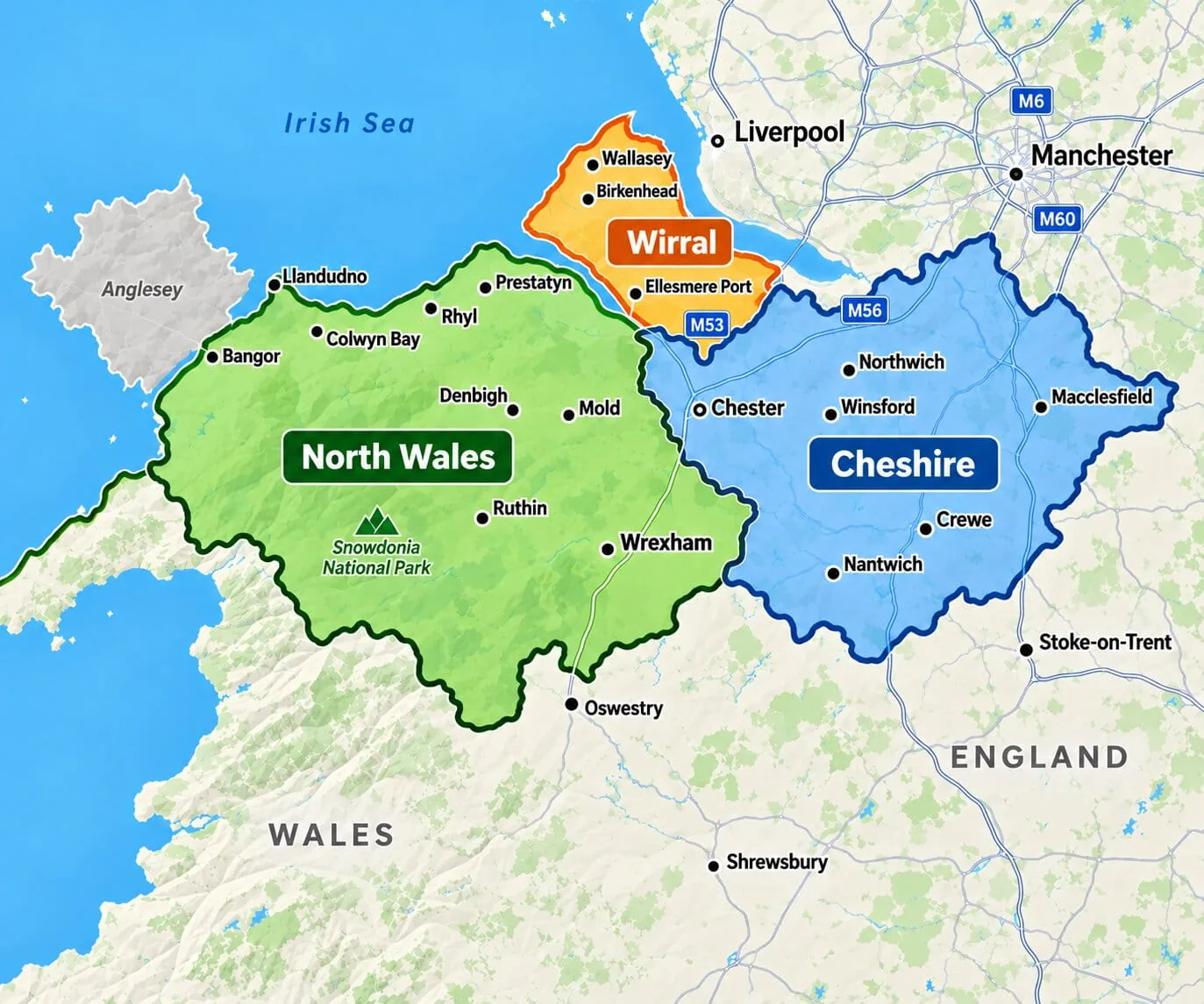 Based In HolywellFlintshire, North Wales
Holywell · Mold · Flint · Buckley · Connah’s Quay
Chester · Ellesmere Port · and surrounding areas
Homes and businesses across the Wirral
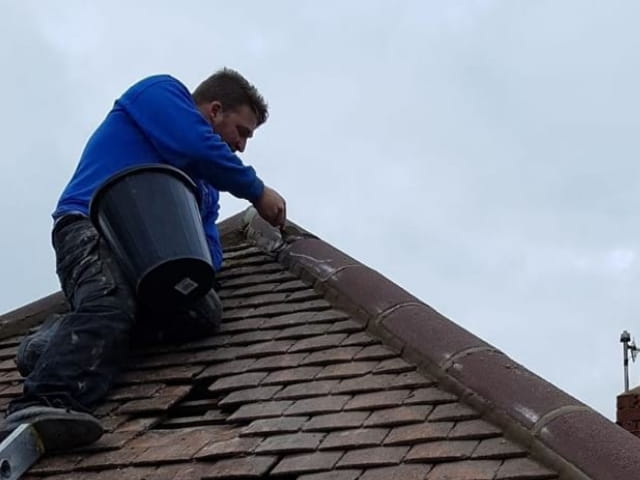
Leaks, slipped tiles, ridges, flashing and storm damage repaired.
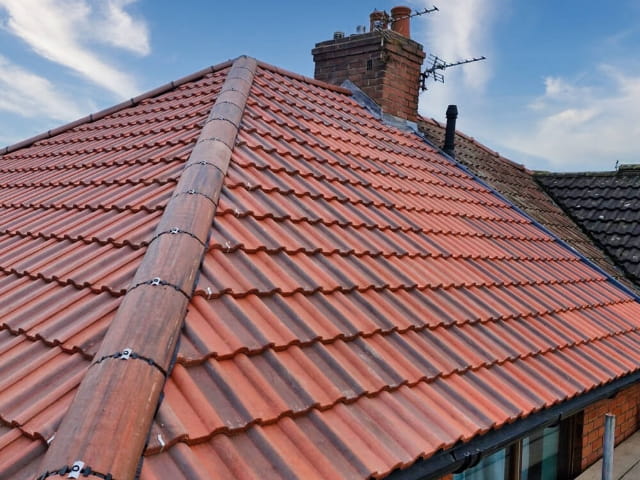
New and replacement slate and tiled pitched roofs.
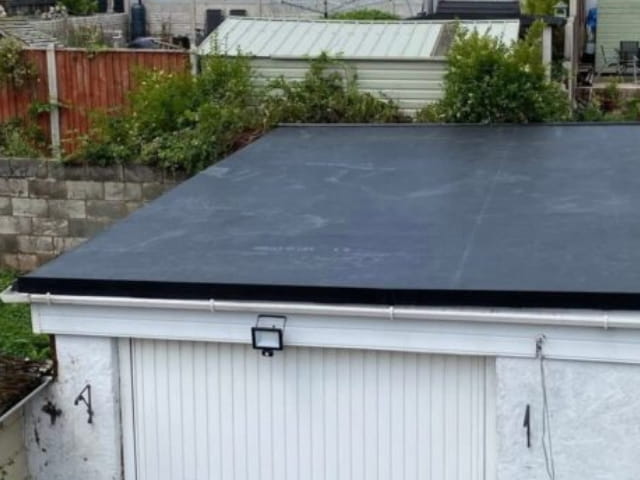
EPDM rubber and liquid rubber flat roofs built to last.
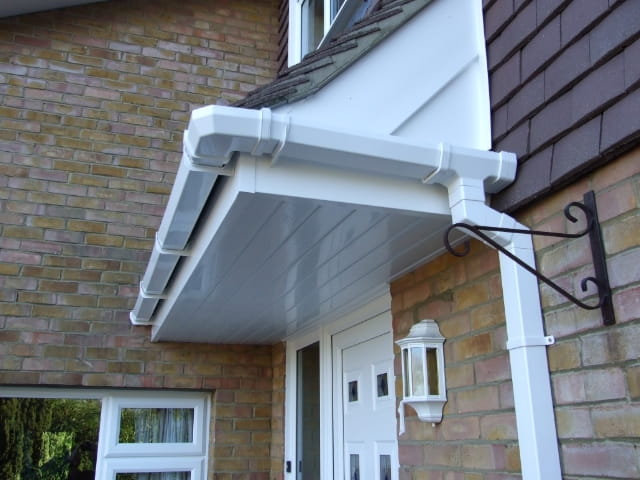
Maintenance-free fascias, soffits, guttering and cladding.
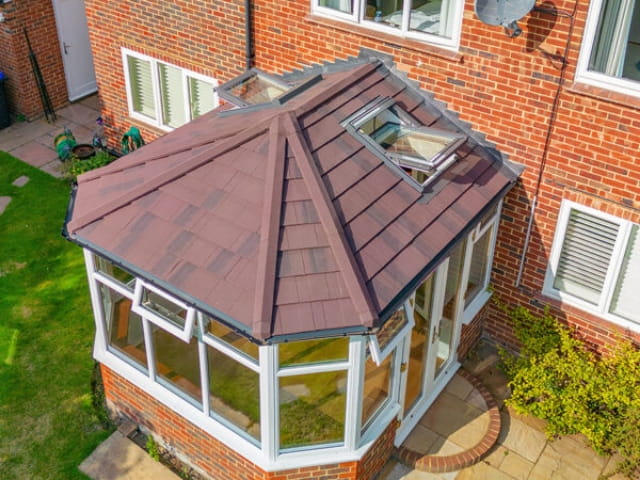
Warm, energy efficient conservatory roof solutions.
Leaks, crumbling brickwork, cracked render, loose pots or storm damage, we’ll tell you honestly what your chimney needs. Speak to us directly for a free, no-obligation quote.
 5.0