
A dry ridge system replaces crumbling mortar with mechanically fixed ridge tiles: every tile clipped and screwed down, with a breathable roll underneath. We fit dry ridge and dry hip systems for homes across Flintshire, North Wales, Chester, Cheshire and the Wirral.
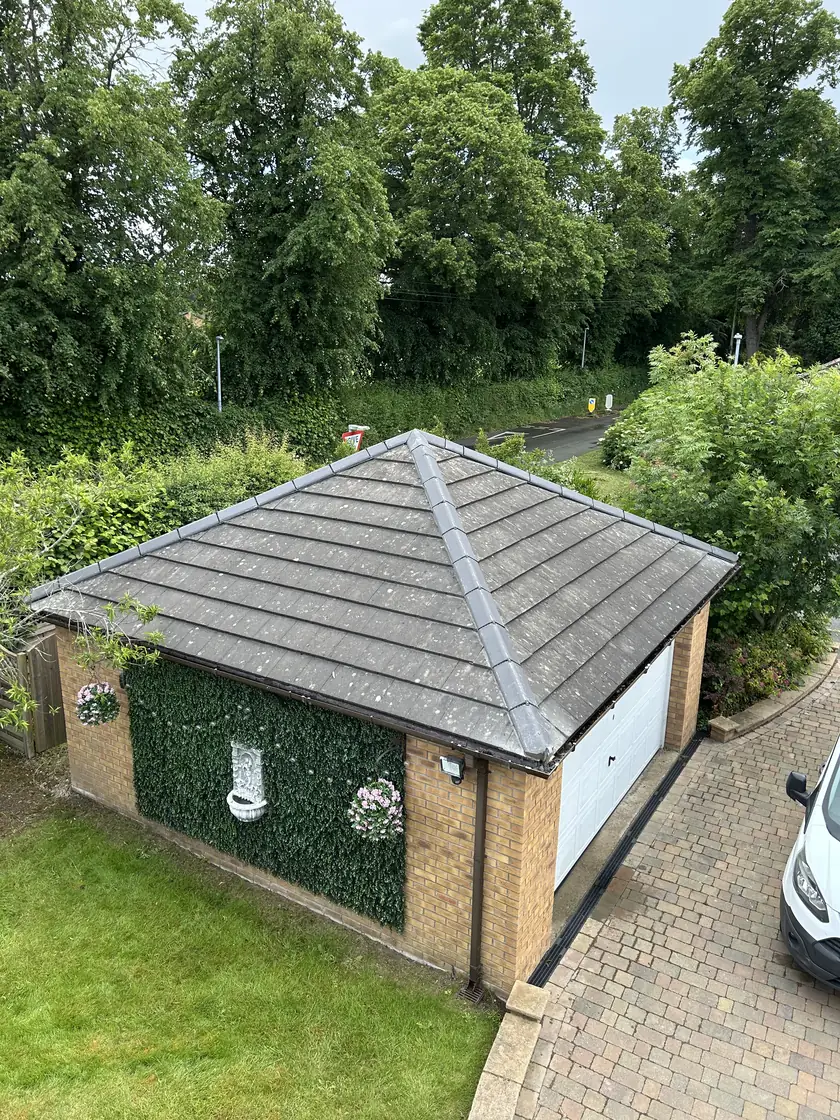
The ridge is the line of tiles running along the very top of your roof, where the two slopes meet. On most older homes in North Wales and Cheshire, those ridge tiles are held on by a bed of sand and cement mortar. A dry ridge system does the same job without any mortar at all.
Instead, each ridge tile is fixed mechanically to a timber batten running along the ridge, using purpose-made uPVC clips and a long screw. A breathable ridge roll sits underneath to seal the gap between the tiles and the ridge while letting the roof breathe. The same approach on the sloping corners of a hipped roof is called a dry hip system.
It’s now the standard way to finish a ridge on new and replacement pitched roofs, and one of the most popular upgrades we carry out as part of roof repairs when an old mortar ridge has started to fail.
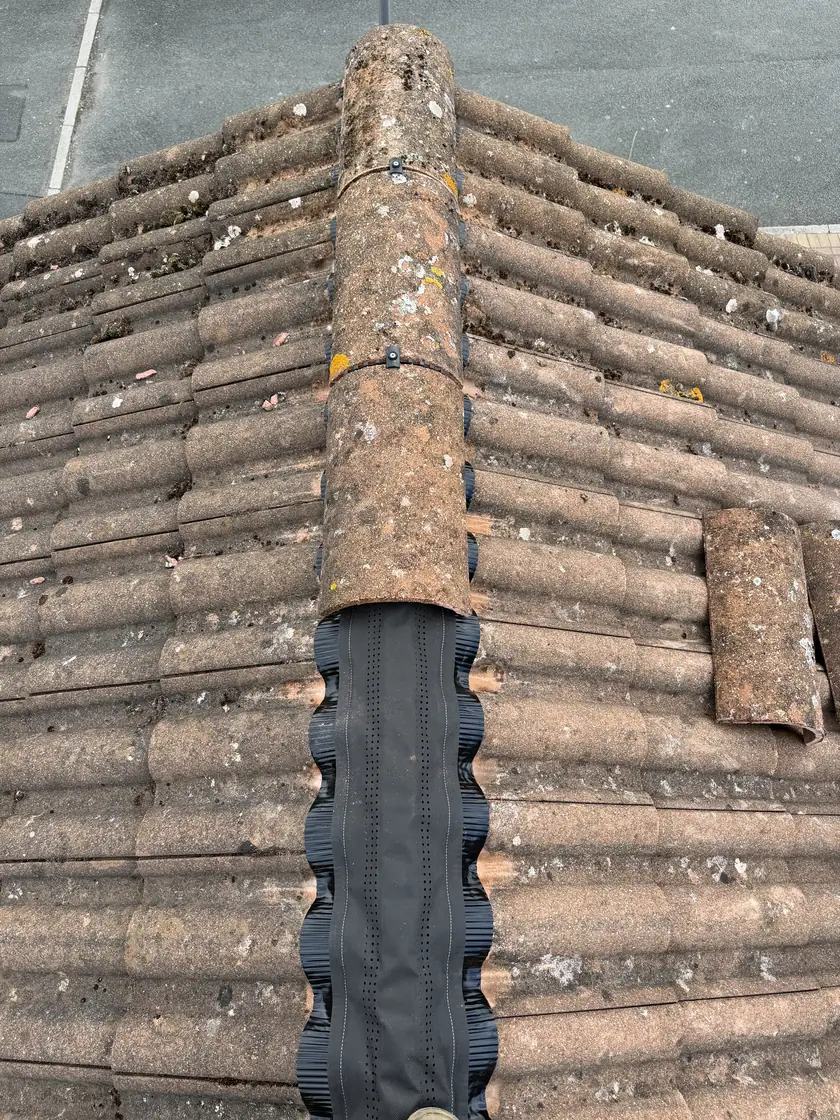

Mortar ridges have been used for generations, but they rely on the strength of the mortar and its bond to the tiles. Over time, weather wins. Here’s why we recommend a dry ridge system instead.
Mortar shrinks, cracks and slowly washes out with rain, frost and the roof’s natural movement. With no mortar to fail, there’s nothing to crumble into your gutters or let water in.
Every tile is clipped and screwed to a timber batten, so it resists wind uplift far better than a tile that relies on mortar alone. That matters on exposed hillsides and along the North Wales coast.
The breathable ridge roll lets moist air escape from the roof void along the ridge line, which helps reduce the risk of condensation in your loft.
No repointing every few years. Once a dry ridge is fitted properly, it needs very little attention beyond a quick check after severe storms.
Clean, consistent joints along the full length of the ridge, with no mortar smears or patchy repairs, giving your roof a sharp, modern look.
The British Standard code of practice for slating and tiling says ridge and hip tiles should be mechanically fixed. A dry ridge fixes every tile mechanically, which makes it a straightforward way to follow that guidance.
Since the 2014 revision of BS 5534, mortar on its own is no longer relied on to hold ridge and hip tiles in place: they should also be mechanically fixed. Mortar can still be used with mechanical fixings, but dry fix systems, which are tested against BS 8612, are now the most common way to meet the requirement on re-roofs and ridge replacements.
A quick look at how a modern dry ridge system compares with a traditional wet, mortar-bedded ridge.
| Feature | Mortar (Wet) Ridge | Dry Ridge System |
|---|---|---|
| How Tiles Are Held | Bedded on sand and cement mortar | Clipped and screwed to a timber batten |
| Wind Resistance | Relies on the mortar’s bond, which weakens with age | Every tile mechanically fixed against uplift |
| Weathering | Cracks, shrinks and washes out over time | No mortar to crack, crumble or wash out |
| Maintenance | Repointing or re-bedding every few years | Very little: a check after severe storms |
| Ventilation | Sealed solid unless vented ridge tiles are added | Breathable roll ventilates along the ridge |
| Appearance | Visible mortar joints that stain and patch | Neat, uniform joints along the full ridge |
| Weather On The Day | Mortar needs dry conditions and no frost to cure | Can be fitted in most safe working conditions |
| BS 5534 | Needs extra mechanical fixings to follow the code | Mechanically fixed as standard |
Got a listed building or a roof where a traditional look must be kept? We’ll talk you through the options honestly.

A dry ridge is only as good as its fixings. We don’t rely on adhesive or a dab of mortar: every single ridge tile is mechanically fixed, so each one is held down on its own rather than depending on its neighbours.
Every dry ridge installation follows the same careful process, whether we’re replacing a failing mortar ridge or finishing a brand new roof. These are real photos from our own dry ridge jobs.
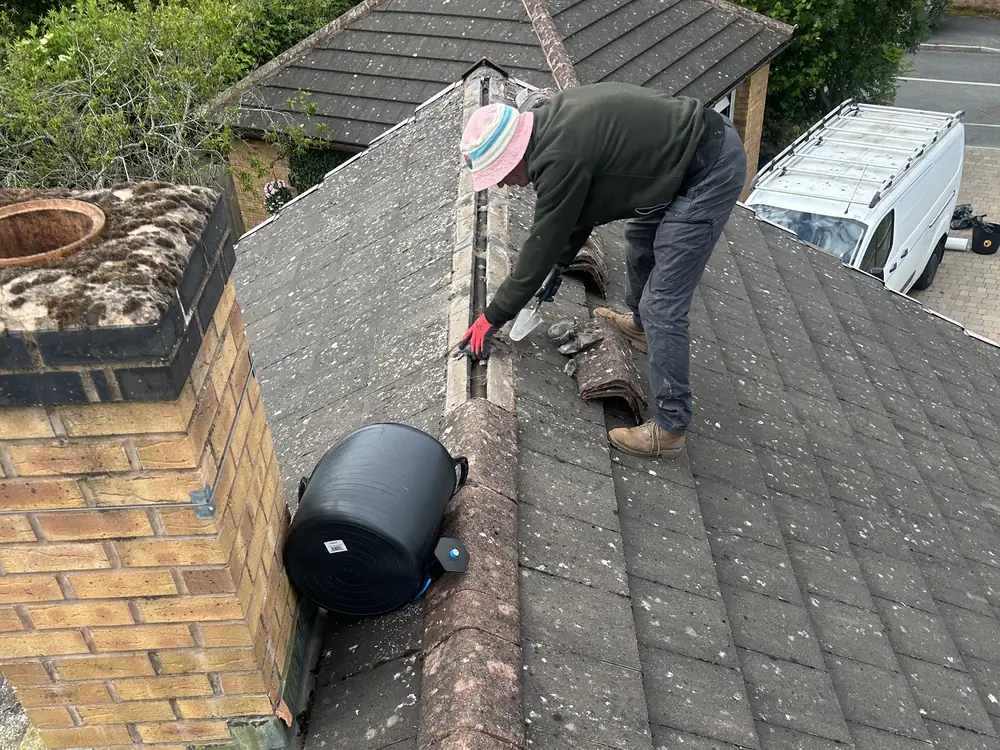
We carefully remove the existing ridge tiles and clear away all of the old mortar bedding, leaving a clean, sound ridge to work from.
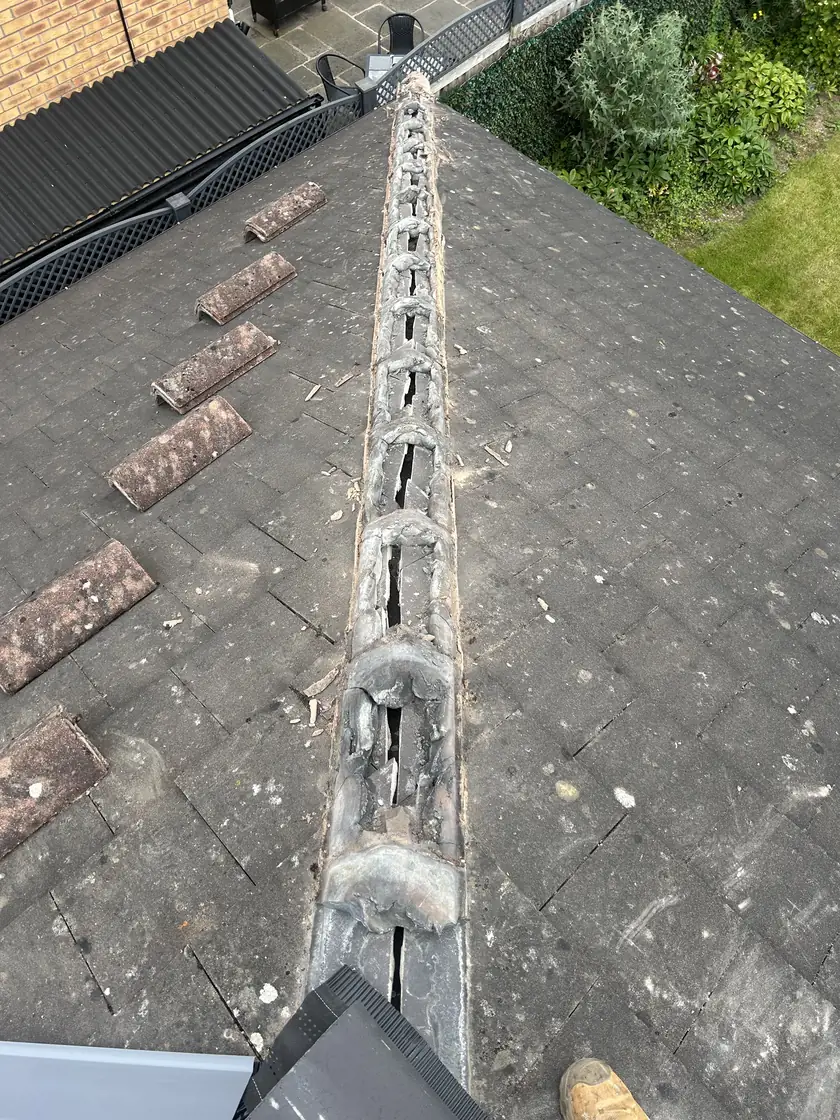
With the ridge stripped back, we check the roof tiles along it and replace any that are broken, cracked or slipped, so the new system sits on a solid, weathertight base.
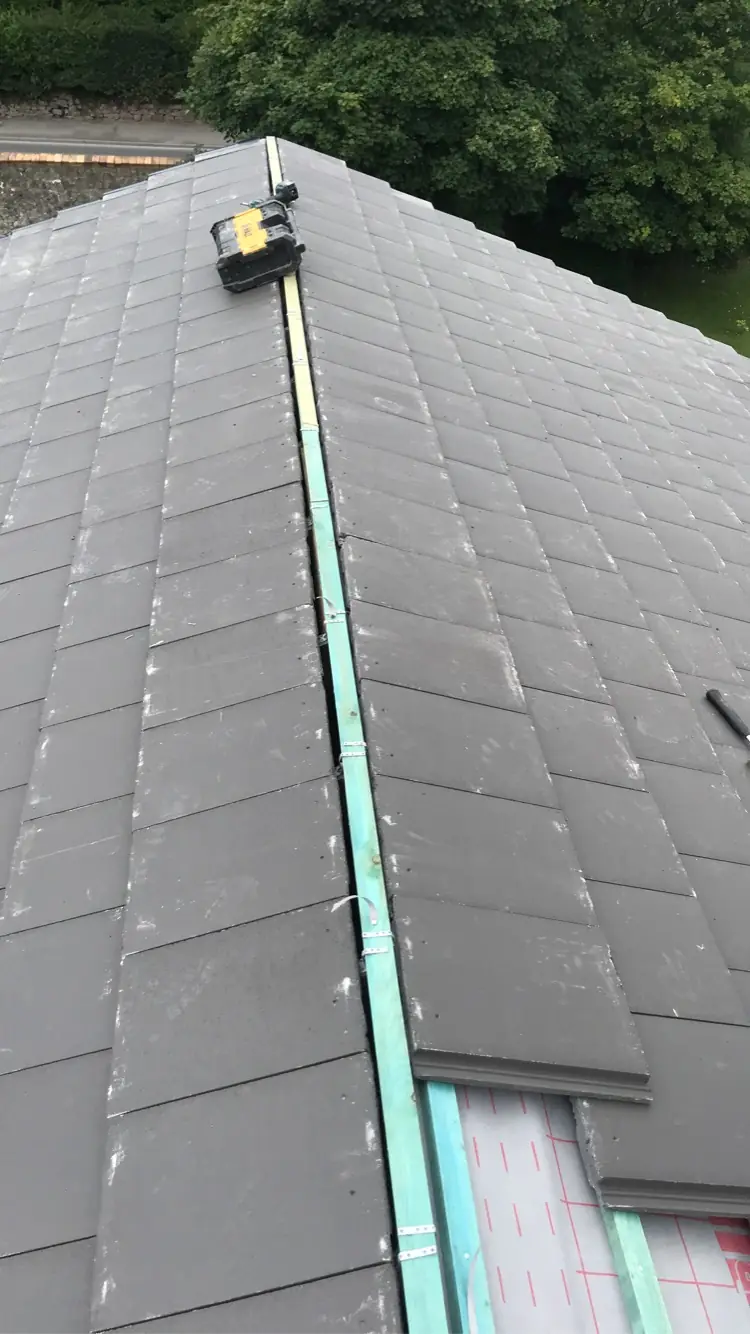
A new 2x1 treated timber batten is fixed to the ridge beam along the full length of the ridge. This is what every ridge tile will be screwed into.
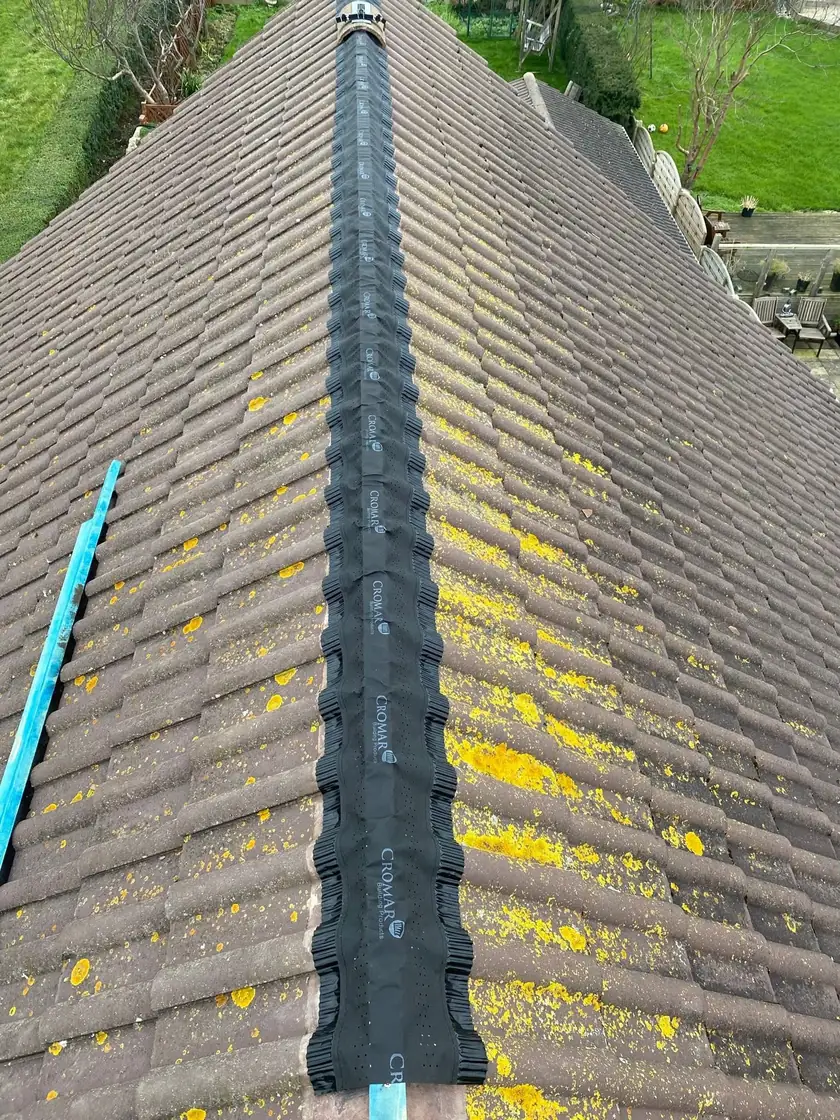
Breathable dry ridge roll is laid over the batten, with its adhesive edges bonded to the tiles on both slopes to seal and ventilate the ridge.
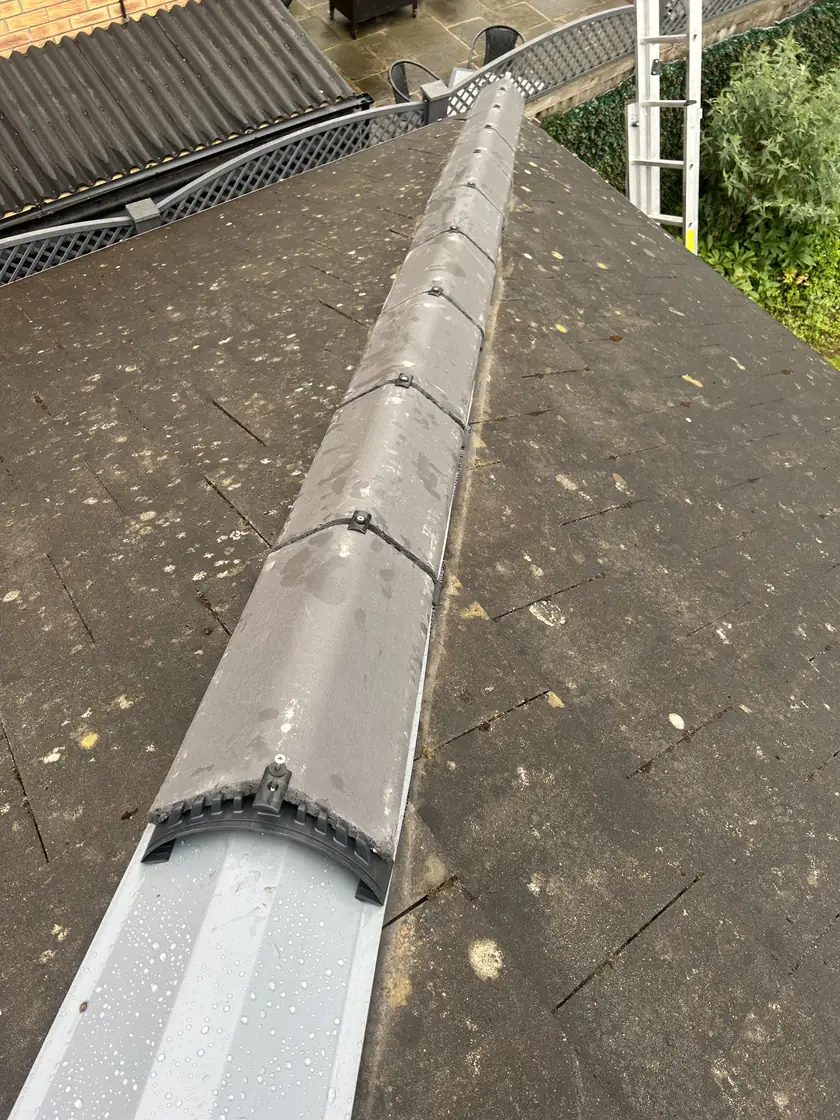
Each ridge tile is set in place with uPVC ridge clips and secured with a 100mm screw into the batten.

We check every tile is tight and aligned, clear all debris from the roof and gutters, and leave you with a neat, mortar-free ridge.
The batten is the backbone of a dry ridge. Fitting a new length of timber, rather than reusing tired old wood, means every 100mm screw has solid timber to hold onto for years to come.
If your existing ridge tiles are sound, we can often clean and refit them on the new system, keeping the look of your roof. Any damaged ones are replaced with a close match.
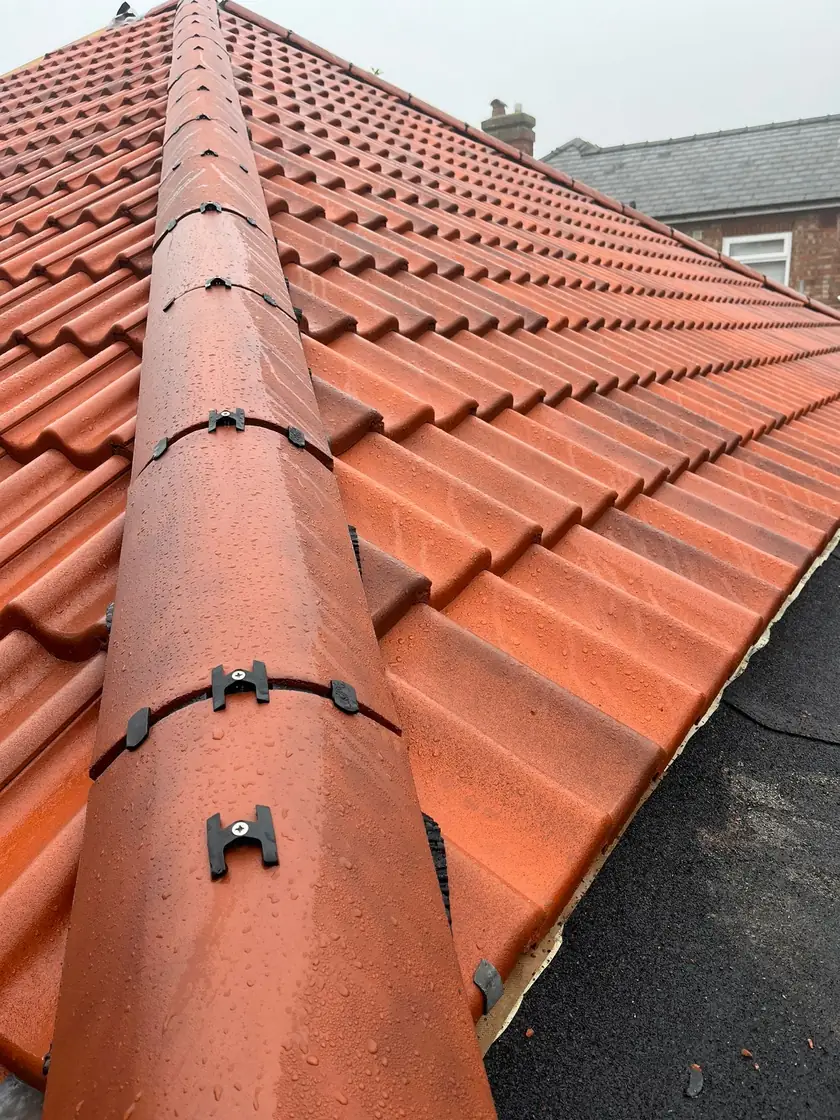
On a hipped roof, the sloping corners are capped with hip tiles, and they’re just as exposed as the ridge. A dry hip system uses the same method: a new batten, breathable roll, uPVC clips and a 100mm screw through every hip tile.
On profiled (interlocking) tiles, we also fit hip trays. These support the hip tiles over the rise and fall of the tile profile, stopping them dipping into the troughs, so the hip line stays straight, level and properly sealed from eaves to ridge.

Ridge problems usually start small. Catching them early can save you from leaks, damp and a much bigger repair bill. Look out for:
Repointing an old mortar ridge can buy time, but the new mortar is still bonding to old mortar and tiles, so it often fails again. Swapping to a dry ridge fixes the cause, not just the symptom. If a ridge tile has already come loose after a storm, see our emergency roof repairs page, or our roof leak repairs page if water is already coming in.
Send us a few photos on WhatsApp and we’ll tell you honestly whether it needs repointing or a dry ridge.
Every roof is different, so we price each dry ridge installation individually after looking at your roof. You’ll get a clear, fixed quote before any work starts. These are the main things that affect the price:
Longer ridges need more battens, roll, clips and tiles, and more time on the roof.
Hipped roofs add dry hip work, including hip trays where the tiles are profiled.
How many broken roof or ridge tiles need replacing once the old ridge is off.
The height of the roof and whether scaffolding or other access is needed to work safely.
Repointing costs less on the day, but it’s a short-term fix. A dry ridge costs more up front and saves you repeat repairs later, so over the life of the roof it usually works out better value.
Every dry ridge and dry hip we fit is covered by our 10-year workmanship guarantee, and we carry £5m public liability insurance with Covéa.
We pride ourselves on the quality of our work. 250+ reviews across Google, Yell and MyBuilder — here’s what a few of our customers said.
Straight answers to the questions homeowners ask us most about dry ridge and dry hip systems.
A dry ridge system is a way of fixing the ridge tiles along the top of your roof without mortar. Each ridge tile is fixed to a timber batten with uPVC clips and a screw, and a breathable ridge roll underneath seals and ventilates the ridge. A dry hip system uses the same method on the hips of a hipped roof.
For most homes, yes. A dry ridge is mechanically fixed, so it resists wind uplift better, and with no mortar there’s nothing to crack or wash out. It also needs far less maintenance and helps ventilate the roof. A traditional mortar ridge can still suit some listed or heritage buildings, and we’ll always give you an honest recommendation.
Not in itself. BS 5534 is a British Standard code of practice rather than a law, but since 2014 it has said that ridge and hip tiles should be mechanically fixed, and mortar alone should not be relied on. Building control, warranty providers and roofing contracts commonly expect work to follow it. A dry ridge system is a straightforward way to do that.
The cost depends on the length of your ridge, how many hips your roof has, the condition of your existing tiles and whether scaffolding is needed. We’ll look at your roof and give you a free, fixed quote before any work starts. You can also send photos on WhatsApp for an initial idea.
The ridge on a typical house can usually be stripped and replaced with a dry ridge system in around a day. Hipped roofs, longer ridges and any tile replacement can add time. We’ll give you a clear timescale with your quote.
Often, yes. If your current ridge tiles are in good condition, we can clean them and refit them on the new dry ridge system to keep the look of your roof. Any cracked or damaged tiles are replaced with the closest match available.
Hip trays sit under the hip tiles on roofs with profiled (interlocking) tiles. They support the hip tiles over the rise and fall of the tile profile so the hips don’t dip into the troughs. If your hipped roof has profiled tiles, we fit them as part of our dry hip system.
Very little. Unlike a mortar ridge, there’s no repointing. We recommend a quick visual check from the ground after severe storms, and if anything ever looks out of place, give us a call.
It can help. The breathable ridge roll lets moist air escape along the ridge, improving ventilation at the top of the roof. Condensation can have several causes, though, so if you have an ongoing problem, we’ll look at your roof and loft ventilation as a whole.
We’re based in Holywell, Flintshire, and fit dry ridge and dry hip systems across North Wales, Cheshire and the Wirral, including Mold, Flint, Wrexham, Chester, Rhyl and the Wirral. See all areas we cover.
Yes. Our workmanship is backed by a 10-year guarantee, which covers repairs too, and we carry £5m public liability insurance with Covéa. With 15+ years experience, we make sure every ridge is fixed properly, first time.
Send a few photos of your ridge on WhatsApp or call 07405 569991, and we’ll give you honest advice and a free quote.
Based in Holywell, Flintshire, we work with homeowners and businesses right across North Wales, Cheshire and the Wirral.
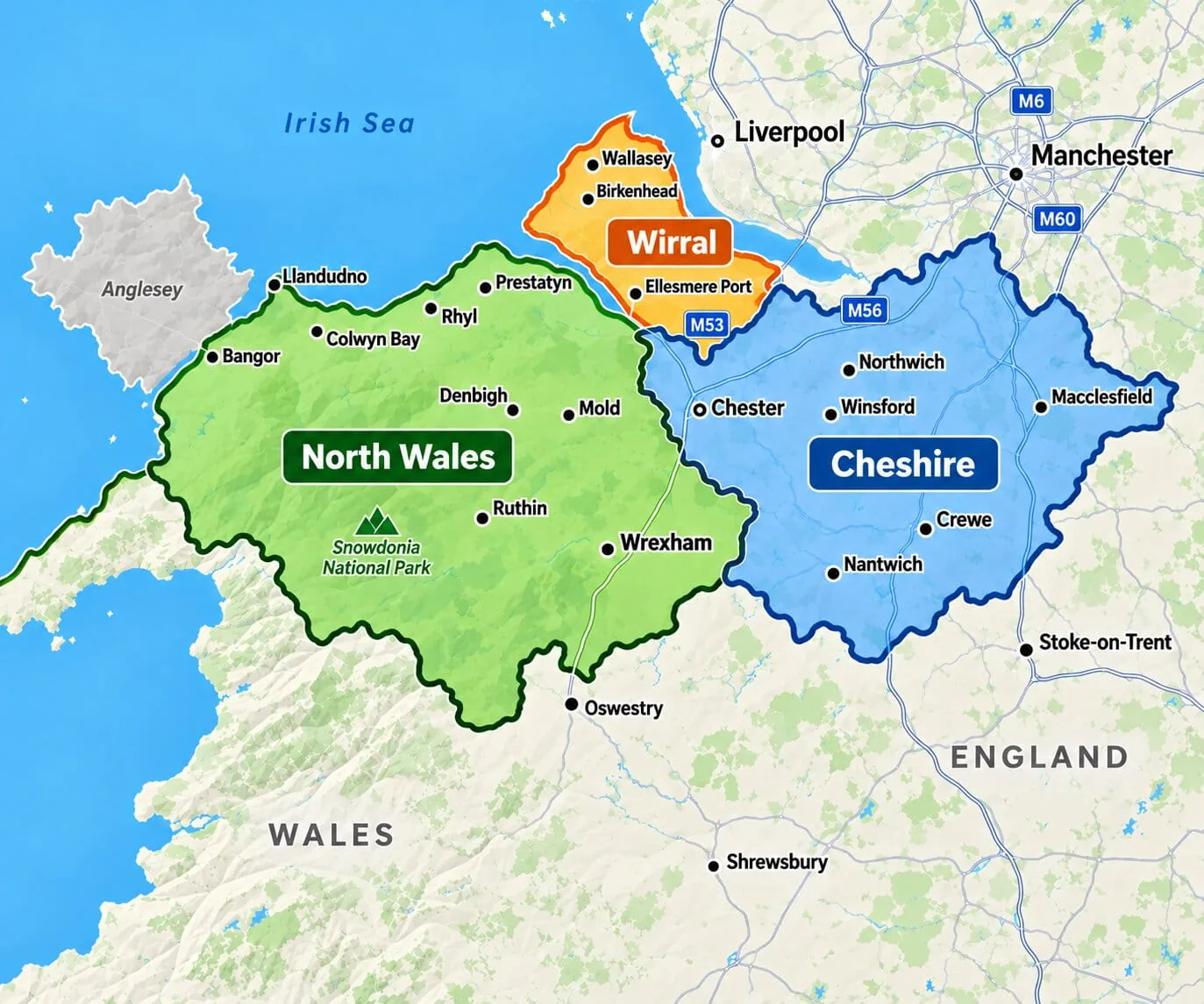 Based In HolywellFlintshire, North Wales
Holywell · Mold · Flint · Buckley · Connah’s Quay
Chester · Ellesmere Port · and surrounding areas
Homes and businesses across the Wirral
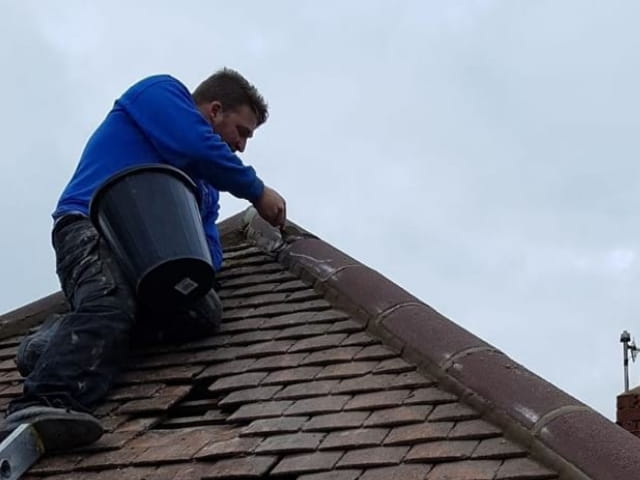
Leaks, slipped tiles, ridges, flashing and storm damage repaired.
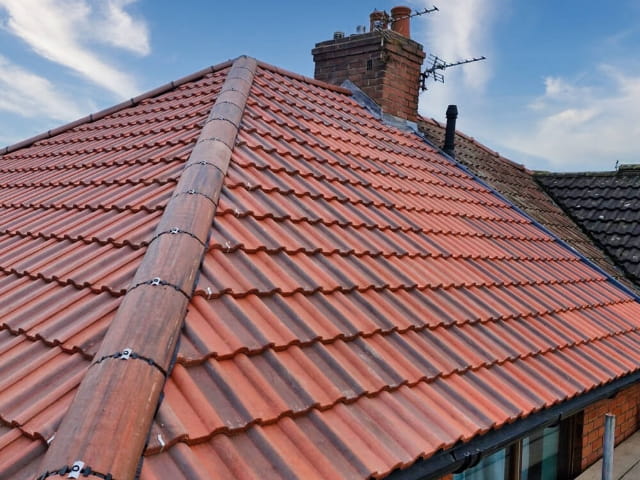
New and replacement slate and tiled pitched roofs.
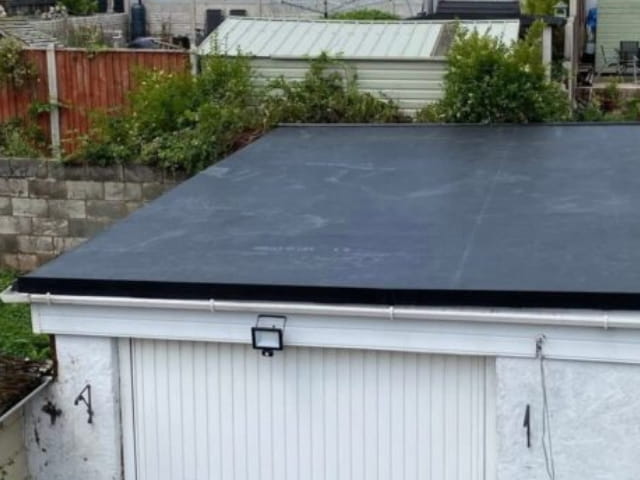
EPDM rubber and liquid rubber flat roofs built to last.
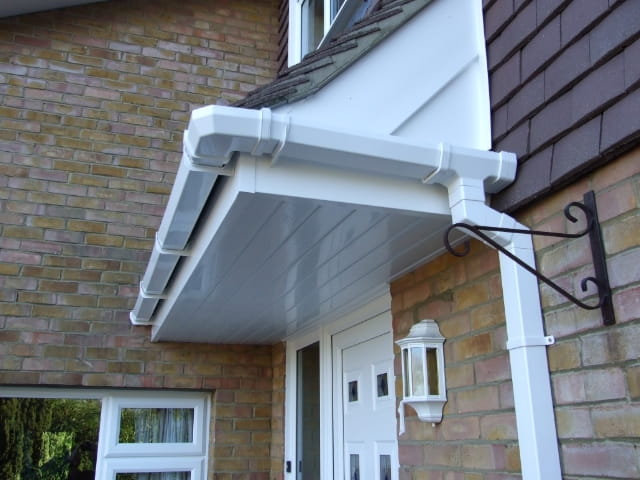
Maintenance-free fascias, soffits, guttering and cladding.
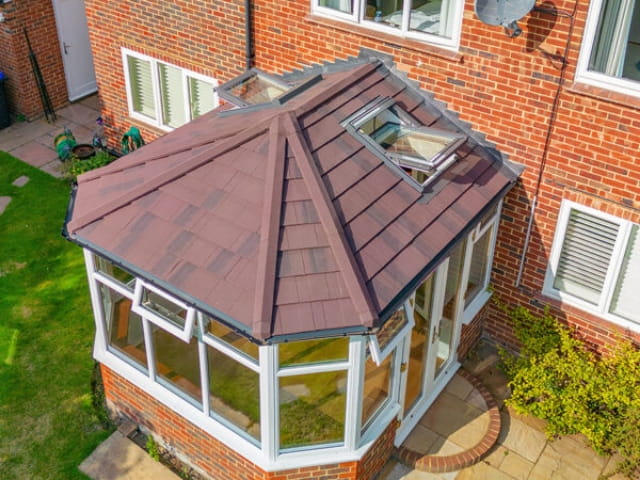
Warm, energy efficient conservatory roof solutions.
Say goodbye to crumbling mortar and repeat repairs. Speak to us directly for honest advice and a free, no-obligation quote for a dry ridge or dry hip system.
 5.0