

If your ridge tiles are loose or the mortar is cracking, you’ve probably been told about two options: repoint or re-bed the mortar, or switch to a dry ridge. Both can work. The right one depends on your roof.
This guide compares dry ridge vs mortar ridge honestly, covering cost, lifespan, maintenance and the building standard. If you already know you want a dry ridge, see our dry ridge systems page.
Key takeaways
- A dry ridge clips and screws every tile to a timber batten, with no mortar to crack.
- A mortar ridge is traditional and can last well, but it needs repointing as it ages.
- BS 5534 now expects ridge tiles to be mechanically fixed on new work.
- Repointing is fine when tiles are secure and only a few joints have cracked.
- For a long-term fix with little upkeep, a dry ridge is usually the better choice.
Dry Ridge vs Mortar Ridge At A Glance
Here’s how the two compare side by side.
| Mortar ridge | Dry ridge | |
|---|---|---|
| How tiles are held | Bedded on sand and cement mortar | Clipped and screwed to a timber batten |
| Fixing | Relies on the mortar’s bond | Every tile mechanically fixed |
| Maintenance | Repointing or re-bedding as it ages | Very little: a check after storms |
| Weather on the day | Needs dry, frost-free conditions | Can be fitted in most working conditions |
| Ventilation | Sealed, unless vented ridge tiles are added | Breathable roll ventilates the ridge |
| Appearance | Traditional mortar joints | Neat, uniform joints along the ridge |
| BS 5534 | Needs extra mechanical fixings on new work | Mechanically fixed as standard |
| Best for | Sound ridges and some period homes | Most homes wanting a long-term fix |
How A Mortar Ridge Works
On a traditional ridge, each ridge tile is laid on a bed of sand and cement. The mortar holds the tile in place and seals the gap along the top of the roof.
Mortar is rigid. Over years of frost, rain, sun and slight roof movement, it shrinks, cracks and washes out. Once gaps open, rain can get in along the top of the roof, and it’s one of the most common causes we find when carrying out roof leak repairs.
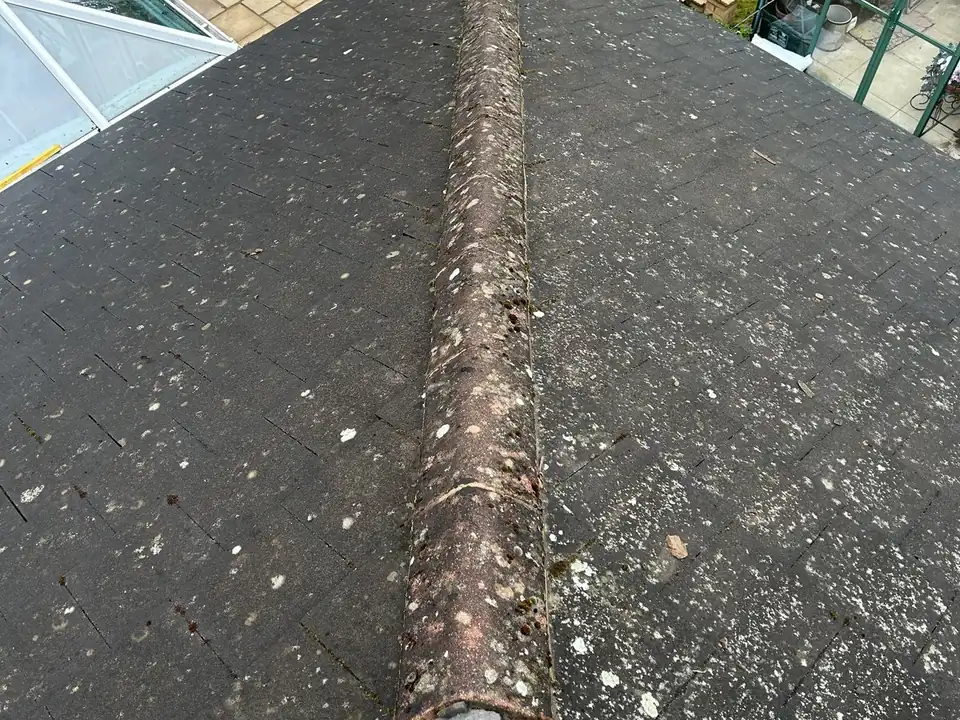
Signs Your Mortar Ridge Needs Attention
- Cracked or crumbling mortar along the ridge
- Bits of mortar in your gutters or on the ground
- Loose, rocking or missing ridge tiles
- Moss that grows between the ridge tiles and pushes them apart
- A ridge line that looks wavy or uneven
- Damp patches near the top of upstairs rooms
Mortar Ridge
Pros
- Traditional look that suits older and period homes
- Repointing a few joints is a low-cost repair
- Can be combined with mechanical fixings
Cons
- Cracks and washes out over time
- Needs repointing or re-bedding as it ages
- Needs dry, frost-free weather to cure
Dry Ridge
Pros
- Every tile clipped and screwed down
- No mortar to crack, so very little upkeep
- Breathable roll ventilates the ridge
Cons
- Costs more upfront than a small repointing job
- Looks slightly different from a mortar ridge
- May not suit some listed or conservation properties
Honest advice: If the tiles are firm and only a few joints have cracked, repointing is a perfectly sensible fix. We’ll tell you honestly if that’s all your ridge needs.
Not sure which you need?
Send Us A Few Photos Of Your Ridge
We’ll tell you honestly whether it needs repointing, re-bedding or a dry ridge. Call or message us for advice or a quote.
How A Dry Ridge Works
A dry ridge replaces the mortar with a mechanical system. Each ridge tile is clipped and screwed down, and a breathable roll seals the ridge underneath.
No mortar means nothing to crack. Every ridge tile is clipped and screwed down to a solid timber batten.
Here’s how we fit one. You can see real photos of each stage on our dry ridge systems page.
- Strip the old ridgeRemove the ridge tiles and clear away all the old mortar bedding.
- Check the tiles belowReplace any broken, cracked or slipped roof tiles along the ridge.
- Fit a new 2×1 battenA new timber batten is fixed along the full length of the ridge.
- Lay the breathable rollThe roll is bonded to the tiles on both slopes to seal and ventilate.
- Clip and screw each tileEvery ridge tile gets a uPVC clip and a 100mm screw into the batten.


Roofer’s tip: Your existing ridge tiles can often be reused. If they’re sound, we clean them up and refit them, so your roof keeps its look.
What Does BS 5534 Say?
BS 5534 is the British Standard code of practice for slating and tiling. Since its 2014 revision, mortar alone is no longer relied on to hold ridge and hip tiles. They should also be mechanically fixed.
Mortar can still be used, but only alongside mechanical fixings. Dry fix systems do the whole job mechanically, which is why they’re now the most common way to meet the standard.
Good to know: BS 5534 applies to new work. A sound mortar ridge doesn’t have to come off, but when a ridge is re-bedded or a roof is replaced, it should be mechanically fixed.
The Factors To Weigh Up
These are the things that should guide your decision.
01
Cost
Repointing a few joints costs least. A full re-bed and a dry ridge are closer in price than many expect.
02
Lifespan
Mortar cracks over time. A dry ridge has no mortar to fail, so it lasts with little attention.
03
Maintenance
Mortar ridges need repointing every so often. A dry ridge needs a quick check after severe storms.
04
Weather
Mortar needs dry, frost-free days to cure. Dry ridges can go on in most working conditions.
05
Ventilation
A breathable roll lets the ridge breathe, which can help reduce condensation in the loft.
06
Appearance
Mortar gives a traditional look. A dry ridge gives a neat, uniform finish.
Which Costs More?
Repointing a handful of cracked joints is the cheapest option in the short term. If the tiles are secure, it can buy you years.
A full re-bed and a dry ridge both mean stripping the ridge, so they’re often closer in price than people expect. Over time, a dry ridge usually works out better value, because there’s no repointing to pay for later.
Every roof is different, so we don’t publish set prices. We’ll look at your ridge and give you a free, clear quote. If other repairs are needed, our roof repairs team can sort them at the same visit.
Dry Hips And Hip Trays On Profiled Tiles
On a hipped roof, the sloping corners are capped with hip tiles. They’re just as exposed as the ridge, and the same choice applies.
A dry hip uses the same method: a new batten, breathable roll, uPVC clips and a 100mm screw through every hip tile.
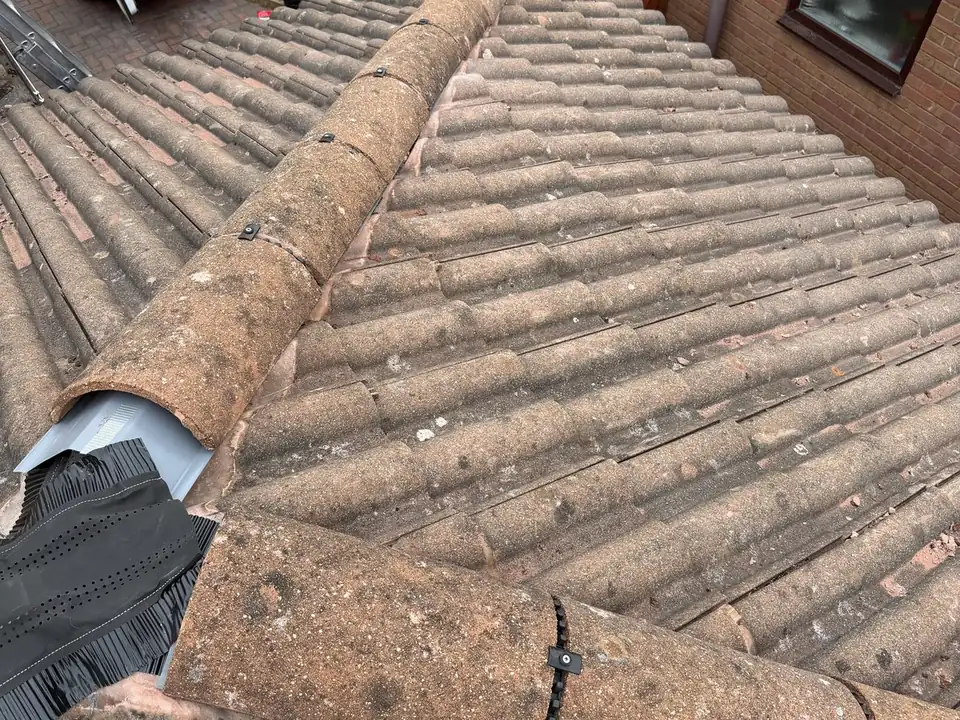
Roofer’s tip: On profiled (interlocking) tiles, we also fit hip trays. They support the hip tiles over the rise and fall of the tile profile, so the hip line stays straight and sealed.
So, Which Is Better?
For most homes, a dry ridge is the better long-term choice. But there are times when a mortar ridge still makes sense.
The best ridge is the one that suits your roof. We’ll always tell you honestly which that is.
Stick With Mortar If
- Your ridge tiles are firm and only a few joints are cracked
- You live in a listed building or conservation area that calls for a traditional look
- You just need a low-cost repair for now
Choose A Dry Ridge If
- Tiles are loose or the mortar is crumbling
- You’ve had the ridge repointed before and it’s failing again
- You want a long-term fix with very little upkeep
- You’re having a new roof fitted
Having a new roof? Every new roof we fit is finished with a dry ridge, plus dry hips on hipped roofs. Find out more about our pitched roofing service, or read about our dry ridge and dry hip systems.
Frequently Asked Questions
Is A Dry Ridge Better Than A Mortar Ridge?
For most homes, yes. A dry ridge holds every tile with a clip and screw, so there is no mortar to crack and very little maintenance. A sound mortar ridge can still have years left in it, though, so it isn’t always worth replacing straight away.
Do I Have To Replace My Mortar Ridge With A Dry Ridge?
No. Since 2014, BS 5534 says ridge and hip tiles should be mechanically fixed when they are laid, but that applies to new work. A sound existing mortar ridge does not have to be removed. When a ridge is re-bedded or a roof is replaced, it should be mechanically fixed.
Can My Old Ridge Tiles Be Reused?
Often, yes. If your existing ridge tiles are sound, we can clean them up and refit them on the new dry ridge, keeping the look of your roof. Any damaged ones are replaced with a close match.
How Long Does It Take To Fit A Dry Ridge?
A typical house ridge takes about a day. Larger roofs, hips and extra repairs can add time, and we’ll give you a clear idea of timings when we quote.
Is Repointing A Ridge Worth Doing?
It can be. If the tiles are secure and only a few joints are cracked, repointing is a sensible, lower-cost fix. If tiles are loose or the bedding is crumbling, a full re-bed or a dry ridge is the better long-term option.
Does A Dry Ridge Need Any Maintenance?
Very little. There’s no mortar to crack or wash out. We recommend a quick visual check after severe storms, as you would with any roof.
What Are Hip Trays And Do I Need Them?
Hip trays sit under the hip tiles on profiled (interlocking) tiles. They support the hip tiles over the rise and fall of the tile profile and keep the hip line straight and sealed. If you have a hipped roof with profiled tiles, they are well worth having.
Do You Offer Free Quotes?
Yes. We give free, no-obligation quotes across North Wales, Cheshire and the Wirral. Send us a few photos of your ridge on WhatsApp, or call us, and we’ll give you honest advice.
Onyx Roofing
Talk To Us About Your Ridge
We fit dry ridges and repair mortar ridges across North Wales, Cheshire and the Wirral. With 15+ years experience, we’ll tell you honestly which your roof needs.
Our work is backed by a 10-year workmanship guarantee, which covers repairs too, and £5m public liability insurance. Call or message us for advice or a quote.
Want to see the system? Visit our dry ridge systems page, or read more advice on our blog.